
Larry Gilbert
Organisms across a dynamic landscape: Reflections on the natural and unnatural history of Central and Southern Texas
This lecture is focused on the southern Texas ecosystem where the speaker Larry Gilbert grew up. Much of the region lacks permanent streams and has a highly unpredictable climate. These factors shaped the ecology and natural history of organisms (including people) in the area known as the brush country. Explorer’s accounts from the early 16th century to the early 19th century allow interpretation of certain myths about the vegetation that have shaped management tactics from the 1950s. Conservation of diversity in this region will rely on a certain amount of myth busting along with private initiatives to recognize and retain remaining tracts of native landscape matching earliest accounts. Economic incentives to conserve natural landscapes in the region include hunting and holistic range management for cattle production. Fragmentation of large private ranches is encouraged by inheritance taxes. Tax “write-offs” for “range improvement” encourage removal of natural vegetation. Legal mechanisms to reverse such trends would indirectly promote conservation of remaining tracts of quality habitat.
Samuel Scarpino
Influenza Dynamics and Vaccination in Texas
From reductions in productivity to severe illness and death, Influenza has a profound impact on our state, country and world. In addition, recent concerns surrounding Avian Influenza and Swine Origin H1N1 have only served to heighten our sense of insecurity about the emergence of a highly virulent, pandemic flu strain. Can we predict the spread of flu in Texas? How are modern vaccines produced and are they safe? Can the effect of a pandemic flu be mitigated? In this talk I will discuss these questions and present research on the dynamics of flu in Texas, our response to emerging pandemic strains, and the development/safety of vaccines.
Barrett Klein
SLEEP and the Plight of a Weary Honey Bee
Sleep is something we can all relate to, but are hard pressed to define. We spend a third of our lives asleep and we have little understanding why. Why do you sleep? Is it for the same reason an insect sleeps? Join me for a foray into the realm of dreams, of different electrophysiological states, and of sleeping insect societies. (some of my work with honey bee and paper wasp sleep: www.pupating.org
Hayley Gillespie
Texas Salamander Extravaganza
Hayley is a graduate student studying the ecology and behavior of the endangered Barton Springs Salamander (Eurycea sosorum) that lives right here in Austin, Texas. Texas is home to many species of salamanders including the giant black & yellow tiger salamanders, two-legged Sirens, waterdogs, spotted newts, slimy salamanders and a diverse group of permanently aquatic salamanders in the genus Eurycea, all very closely related to our Barton Springs Salamander. Come and learn about their incredible biology, how they survive in all kinds of habitats, and what’s being done to conserve and protect these fascinating amphibians!
John Abbott
The Art and Science of High-speed Flash Photography


Have you ever wondered what you could see in nature by stopping the motion of a fast moving event? With high-speed flash photography, you can achieve exposures as fast as 1/50,000 sec and see exactly how a wing might be used in flight or a beetle might dive into the water. I will talk about what high-speed flash photography is and the techniques involved in carrying it out along with the implications for scientific inquiry.
Dr. John Abbott is curator of insects at the Texas Natural Science Center and is owner of John C. Abbott Nature Photography

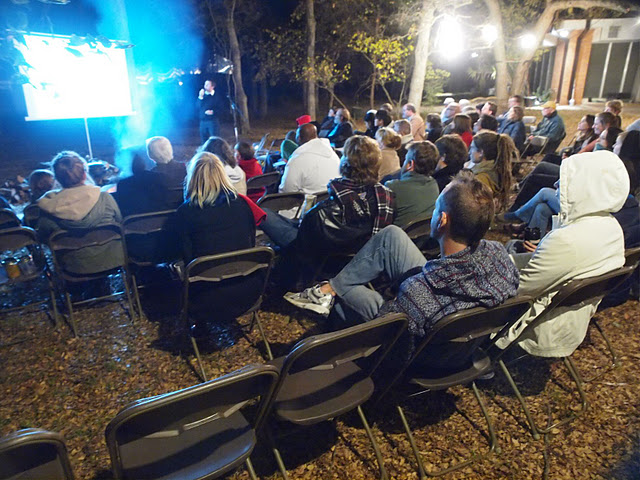

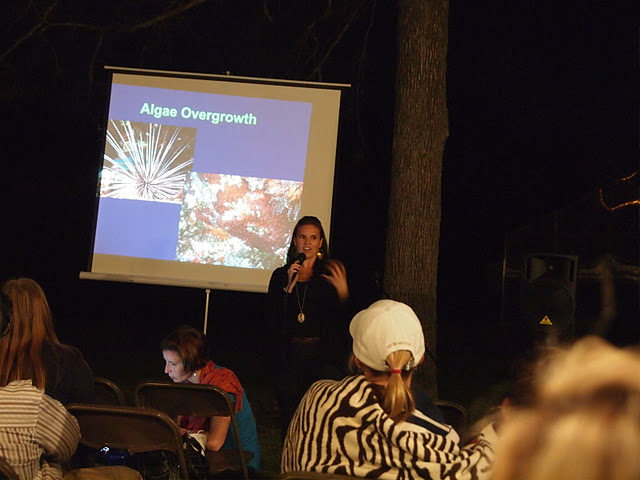

 Science Under The Stars