Fall 2026 Schedule
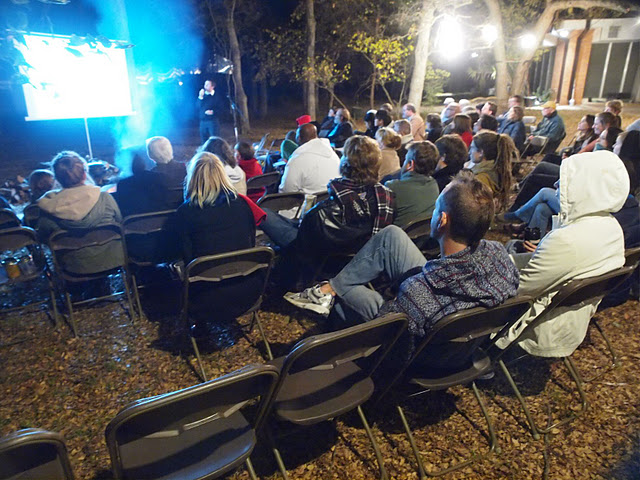
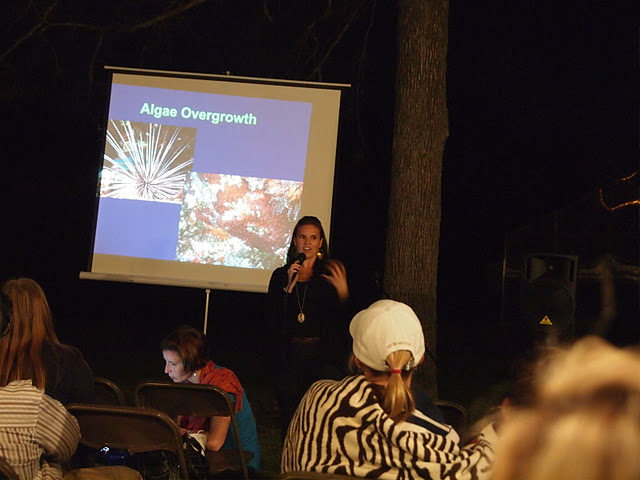
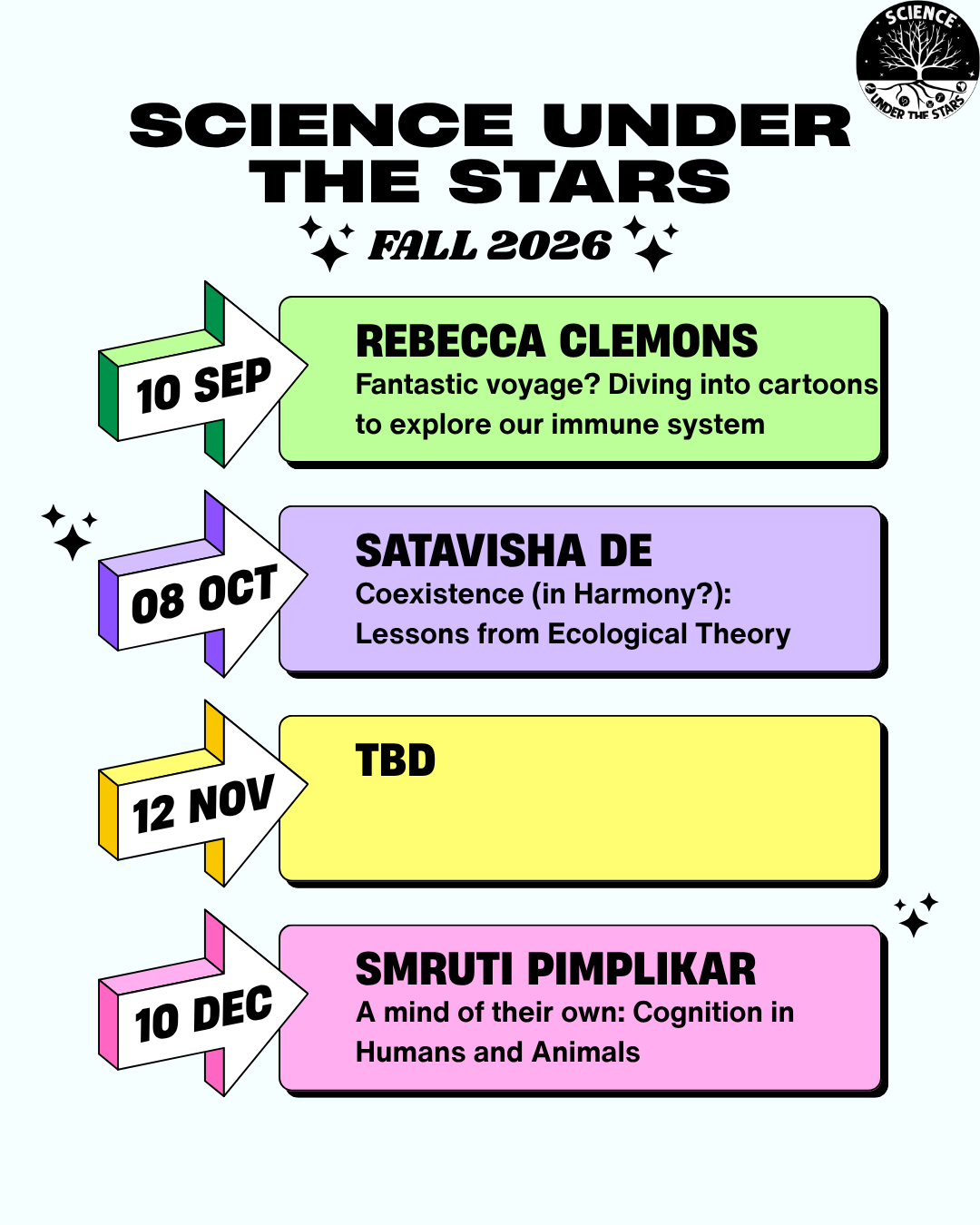
Welcome back for a new semester! We are excited to announce Science Under The Stars’ Fall 2026 schedule. SUTS is our free, student-run public outreach lecture series! Mark your calendars for our monthly events covering topics on science and nature by biologists at UT:
September 10: Rebecca Clemons– Fantastic voyage? Diving into cartoons to explore our immune system
October 8: Satavisha De– Coexistence (in Harmony?): Lessons from Ecological Theory
November 12: TBD
December 10: Smruti Pimplikar–A mind of their own: Cognition in Humans and Animals
Lecture Schedule
- 7:00 pm: Kid’s activities and natural history displays
- 7:15 pm – 7:45 pm: Guided tour of the Brackenridge Field Laboratory (sturdy shoes and water recommended!)
- 8:00 pm: The talk begins!
- 8:45 pm: Q&A with the speaker
Details
- Location: Brackenridge Field Laboratory, 2907 Lake Austin Blvd, Austin, Texas 78703
- No RSVP is required – just show up and enjoy!
- While we aim to host all events outdoors, sometimes weather conditions or volunteer capacity may require that we move the event inside the laboratory building.
- Free parking is available at BFL for all lecture events!
In accordance with UT policy our organization has some new rules to abide by to ensure the safety and protection of minors at Science Under the Stars events:
We at SUTS cannot take custodial responsibility for minors during our events. Parents, legal guardians, teachers, and/or designated adult chaperones must remain with minors at all times.
Specifically:
- Only minors accompanied by a parent, guardian, or adult chaperone will be allowed to participate.
- A parent, guardian, or adult chaperone must remain on-site for the whole duration of the event.
- Dropping off minors without an accompanying adult is not permitted.
- Minors who arrive unaccompanied will not be allowed to participate.
- 18-year-old high school students are still considered minors under this policy and must also be accompanied.
Below are the links for the Docusign form that need to be completed prior to the event!
English: https://www.docusign.net/Member/PowerFormSigning.aspx?PowerFormId=61d35c10-fb15-4cd3-abdf-bf401130bd8d&env=na1&acct=d40a37d5-d708-44dd-9ea7-aab378b81326&v=2
Spanish: https://www.docusign.net/Member/PowerFormSigning.aspx?PowerFormId=17b6b621-00f3-47c0-ba20-9086acc7bf5a&env=na1&acct=d40a37d5-d708-44dd-9ea7-aab378b81326&v=2
Follow us on our Instagram, Twitter, YouTube, Facebook, or email us to stay updated on event-specific details. We look forward to seeing you this spring under the stars!
October 8th, Satavisha De
Coexistence (in Harmony?): Lessons from Ecological Theory
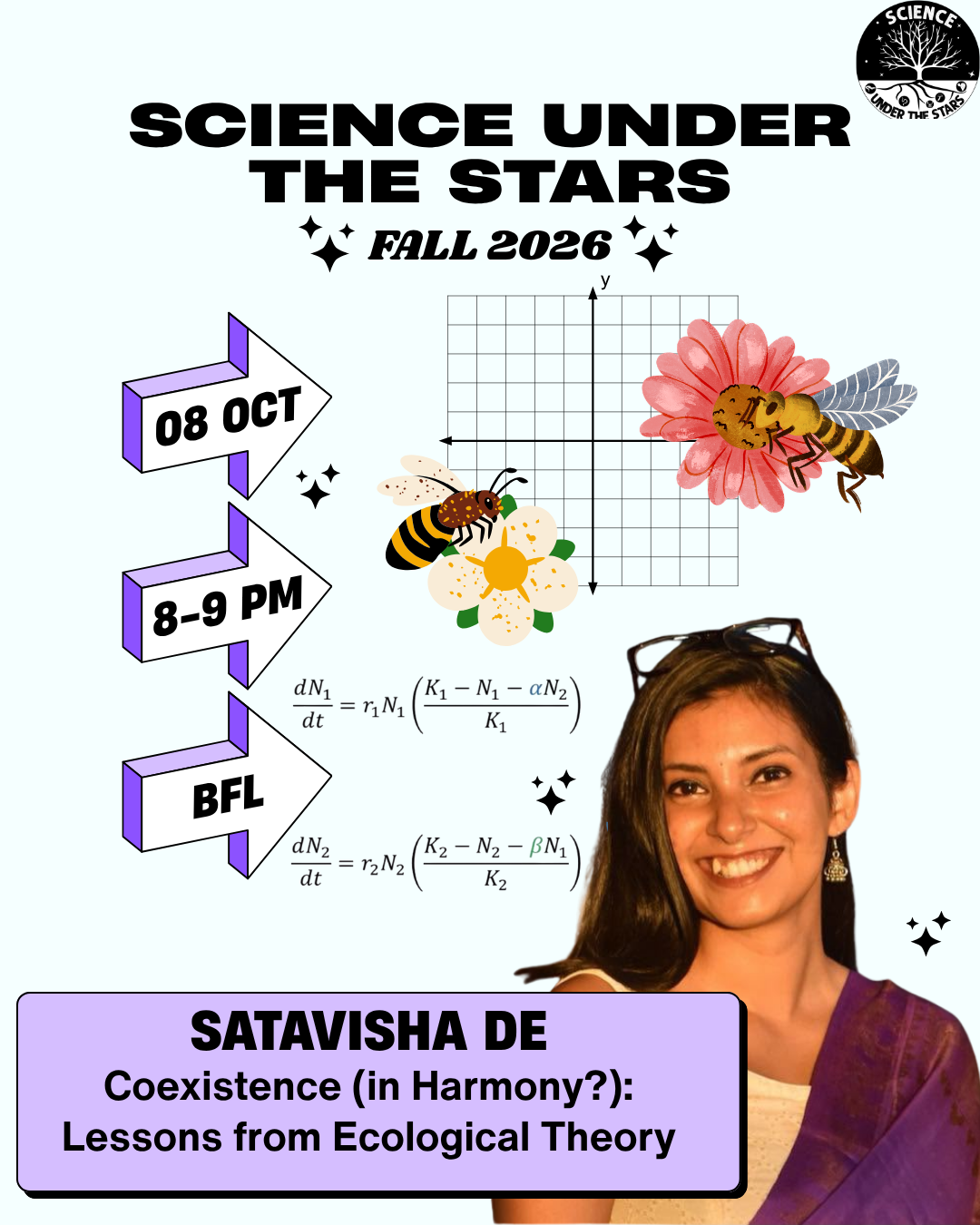
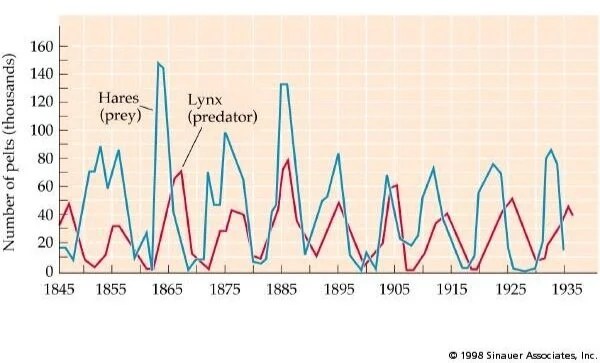
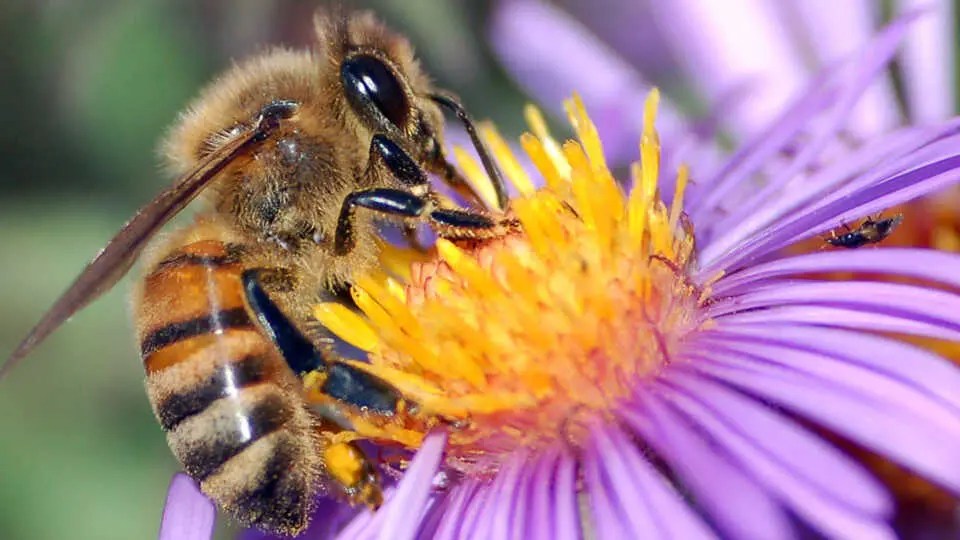
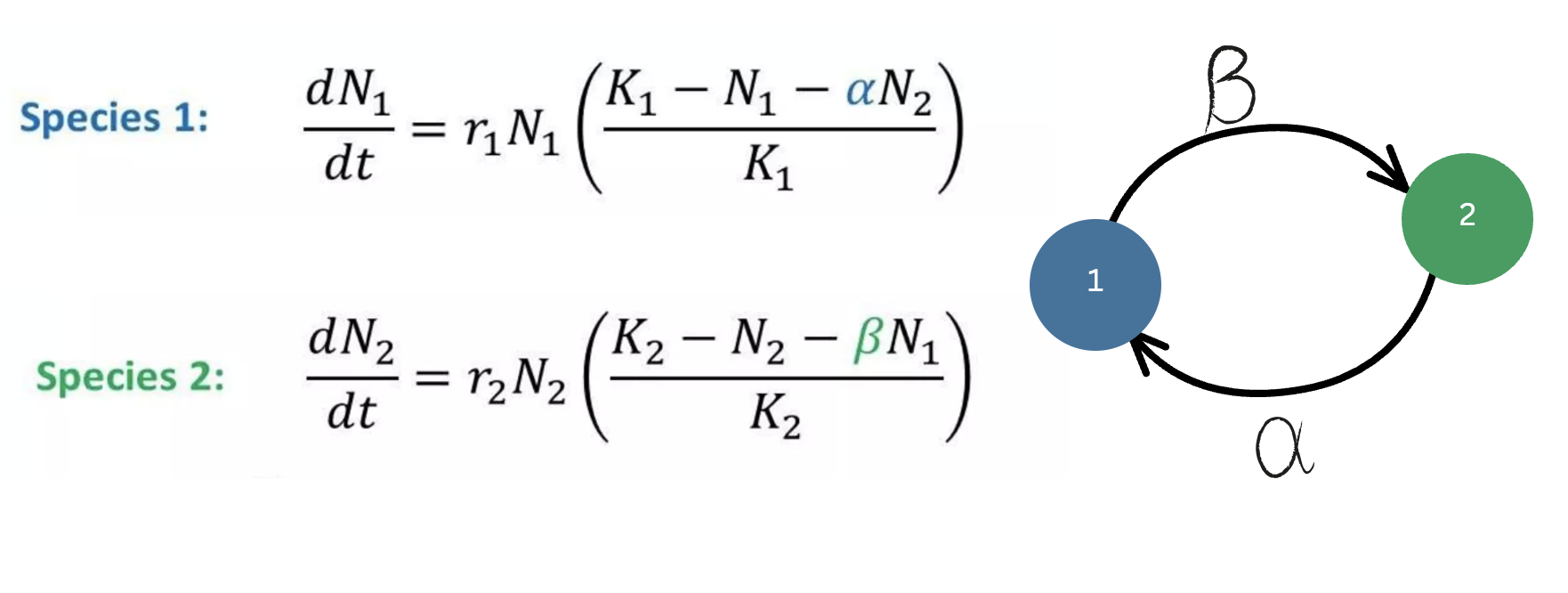
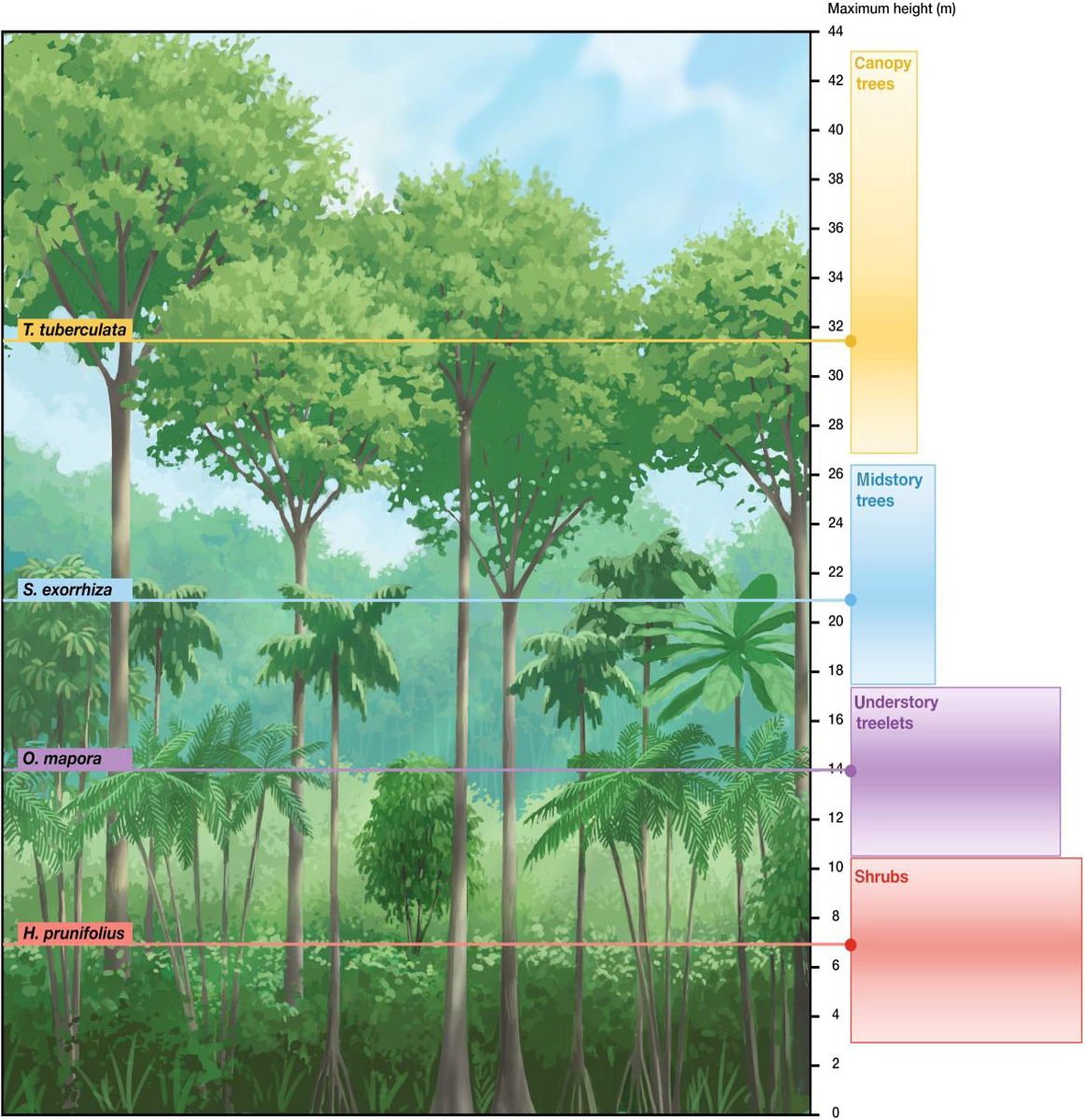
Why are there so many species around us, and how can they coexist in a world full of competition, predation, and limited resources? In this talk, we’ll take a whirlwind tour of ecological theory, from population growth and species interactions to ecological niches, spatial patterns, and mutualisms. We’ll do all this as we explore how scientists use theory to understand complex ecological systems and how these ideas about coexistence connect to ideas outside biology in economics, game theory, and other fields. Ultimately, we want to ask what these theories can teach us about the diversity of the living world and how to understand it as we navigate an ever-changing world.
Satavisha De is a PhD candidate at UT Austin in the Ostling lab. Satavisha is interested in the patterns resulting from community assembly processes. She is currently studying how emergent trait clusters in stochastic niche communities may manifest in phylogenetic patterns.
Lecture Schedule
- 7:00 pm: Kid’s activities and natural history displays
- 7:15 pm – 7:45 pm: Guided tour of the Brackenridge Field Laboratory (sturdy shoes and water recommended!)
- 8:00 pm: The talk begins!
- 8:45 pm: Q&A with the speaker
📍 Location: Brackenridge Field Laboratory, 2907 Lake Austin Blvd, Austin, Texas 78703
💡 No RSVP is required – just show up and enjoy!
🅿️ Free parking is available at BFL for all lecture events!
🌦️ While we aim to host all events outdoors, sometimes weather conditions or volunteer capacity may require that we move the event inside the laboratory building.
In accordance with UT policy our organization has some new rules to abide by to ensure the safety and protection of minors at Science Under the Stars events:
We at SUTS cannot take custodial responsibility for minors during our events. Parents, legal guardians, teachers, and/or designated adult chaperones must remain with minors at all times.
Specifically:
- Only minors accompanied by a parent, guardian, or adult chaperone will be allowed to participate.
- A parent, guardian, or adult chaperone must remain on-site for the whole duration of the event.
- Dropping off minors without an accompanying adult is not permitted.
- Minors who arrive unaccompanied will not be allowed to participate.
- 18-year-old high school students are still considered minors under this policy and must also be accompanied.
Below are the links for the Docusign form that need to be completed prior to the event!
English: https://www.docusign.net/Member/PowerFormSigning.aspx?PowerFormId=61d35c10-fb15-4cd3-abdf-bf401130bd8d&env=na1&acct=d40a37d5-d708-44dd-9ea7-aab378b81326&v=2
Spanish: https://www.docusign.net/Member/PowerFormSigning.aspx?PowerFormId=17b6b621-00f3-47c0-ba20-9086acc7bf5a&env=na1&acct=d40a37d5-d708-44dd-9ea7-aab378b81326&v=2
Follow us on our Instagram, Twitter, YouTube, Facebook, or email us to stay updated on event-specific details. We look forward to seeing you at our events! ✨
September 10th, Rebecca Clemons
Fantastic voyage? Diving into cartoons to explore our immune system
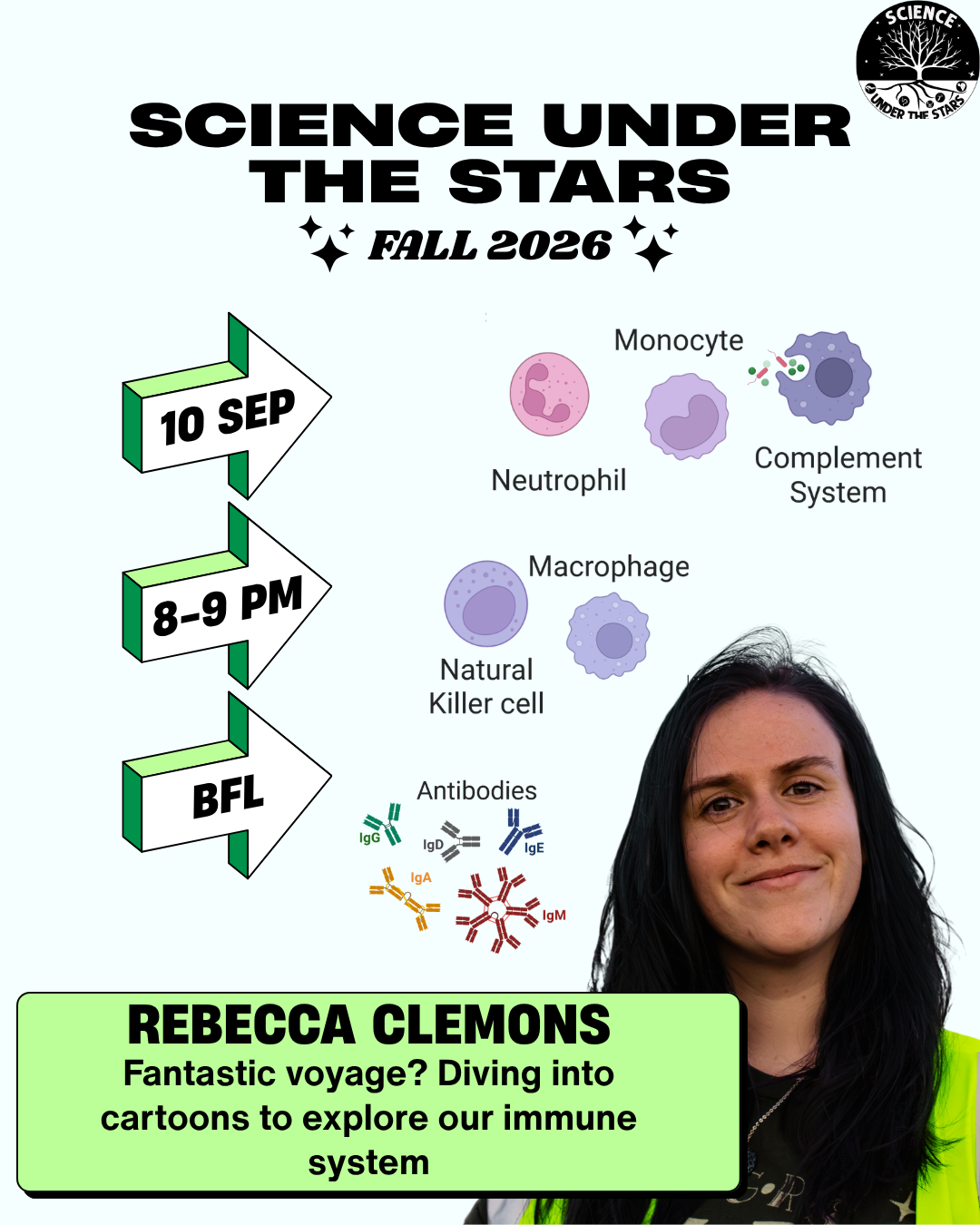
Rebecca is a PhD candidate at UT Austin who works on understanding how the amphibian immune system responds to disease. The overall structure of the immune system is very similar across vertebrate animals (mammals, birds, reptiles, amphibians, and fish), so the lessons we learn while trying to understand human health can be translated to all kinds of other animals. Rebecca uses genetics and cell biology to characterize the amphibian immune system and to investigate why some amphibians are more susceptible to disease than others. She is also a huge fan of cartoons, both educational and for fun!
Lecture Schedule
- 7:00 pm: Kid’s activities and natural history displays
- 7:15 pm – 7:45 pm: Guided tour of the Brackenridge Field Laboratory (sturdy shoes and water recommended!)
- 8:00 pm: The talk begins!
- 8:45 pm: Q&A with the speaker
📍 Location: Brackenridge Field Laboratory, 2907 Lake Austin Blvd, Austin, Texas 78703
💡 No RSVP is required – just show up and enjoy!
🅿️ Free parking is available at BFL for all lecture events!
🌦️ While we aim to host all events outdoors, sometimes weather conditions or volunteer capacity may require that we move the event inside the laboratory building.
In accordance with UT policy our organization has some new rules to abide by to ensure the safety and protection of minors at Science Under the Stars events:
We at SUTS cannot take custodial responsibility for minors during our events. Parents, legal guardians, teachers, and/or designated adult chaperones must remain with minors at all times.
Specifically:
- Only minors accompanied by a parent, guardian, or adult chaperone will be allowed to participate.
- A parent, guardian, or adult chaperone must remain on-site for the whole duration of the event.
- Dropping off minors without an accompanying adult is not permitted.
- Minors who arrive unaccompanied will not be allowed to participate.
- 18-year-old high school students are still considered minors under this policy and must also be accompanied.
Below are the links for the Docusign form that need to be completed prior to the event!
English: https://www.docusign.net/Member/PowerFormSigning.aspx?PowerFormId=61d35c10-fb15-4cd3-abdf-bf401130bd8d&env=na1&acct=d40a37d5-d708-44dd-9ea7-aab378b81326&v=2
Spanish: https://www.docusign.net/Member/PowerFormSigning.aspx?PowerFormId=17b6b621-00f3-47c0-ba20-9086acc7bf5a&env=na1&acct=d40a37d5-d708-44dd-9ea7-aab378b81326&v=2
Follow us on our Instagram, Twitter, YouTube, Facebook, or email us to stay updated on event-specific details. We look forward to seeing you at our events! ✨
April 16th, Stengl-Wyer Fellows and Scholars
An Evening with Biodiversity Researchers
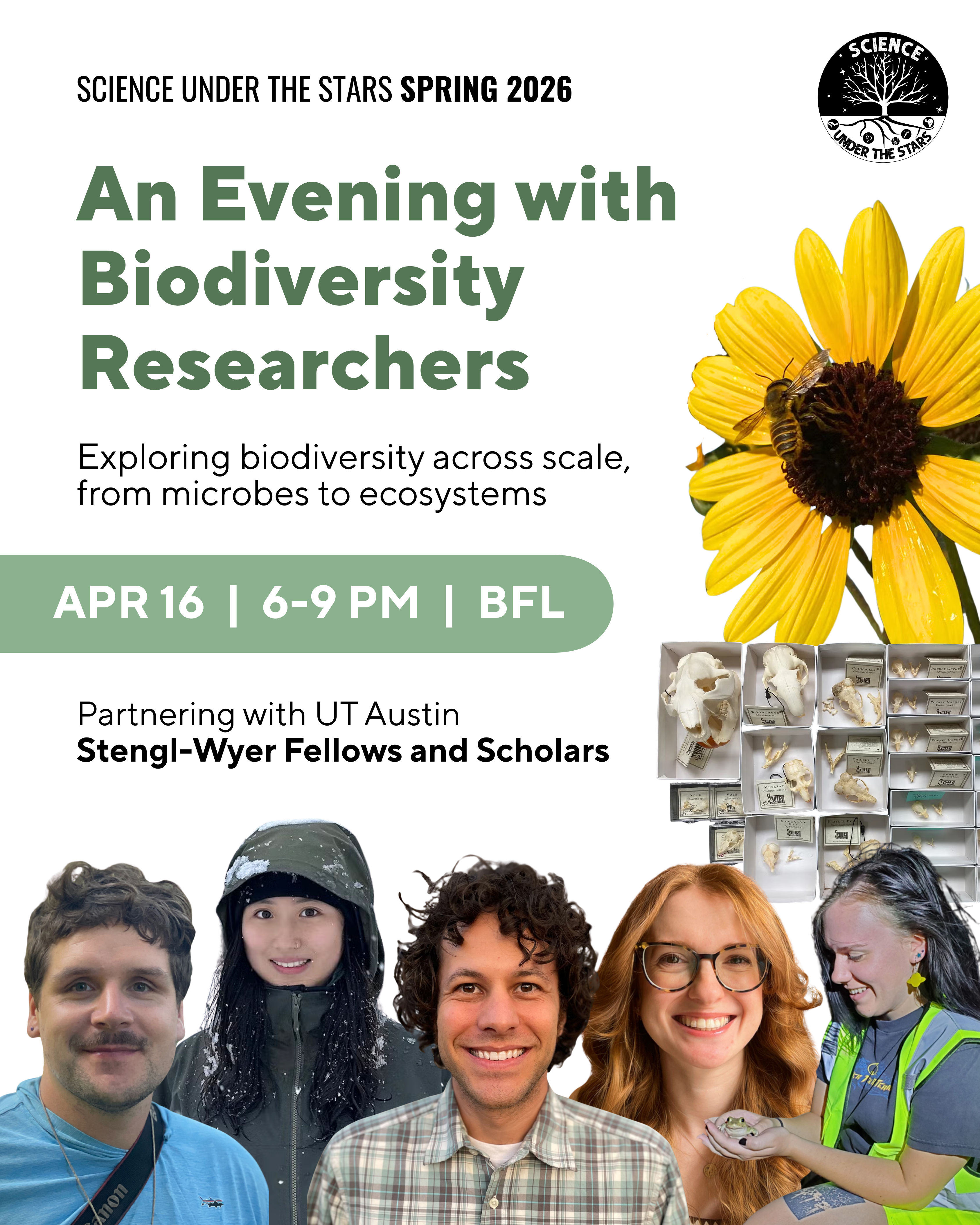
Join us on April 16th to learn about biodiversity from Stengl-Wyer Scholars and Fellows!
Participating Stengl-Wyer Scholars and Fellows:
Korin Jones is a Stengl-Wyer postdoc working in the lab of Nancy Moran. He is broadly interested in microbiome assembly, host-microbe, and microbe-microbe interactions. The communities of bacteria that associate with animals, often referred to as the microbiome, are often beneficial for their animal hosts. Honeybees, which are deeply tied to our agricultural systems, have developed a small, but consistent microbiome that has similar bacteria regardless of geographic location. In honeybees, the bacteria living within the gut aids hosts in obtaining nutrients, detoxifying poisonous plant compounds, and fighting off diseases.
Rebecca Clemons is a graduate student studying the evolution of immunity in amphibians and understanding how amphibian immune systems respond to pathogens. Rebecca will be running the amphibian disease activity. This activity explores how frogs face tradeoffs between being able to resist disease and being able to reproduce, including how diversity within frog populations is important.
Julia Schap is a Stengl-Wyer postdoc who studies the responses of small mammal (rodent and rabbit) communities to changes in climate. Julia will be discussing how we can use the modern relationship between physical traits of species and climate to estimate climate in the fossil record as well as predict which communities may be threatened to future climate and human land use changes.
Guillaume Dury is a Stengl-Wyer postdoctoral researcher, and his research aims at understanding why tropical insects eat the trees they eat and not other trees based on chemical defenses. Guillaume will have preserved Texas insects to show and will be happy to answer your questions about insects and arthropods.
Dale Forrister is a Stengl-Wyer postdoc who studies how plants use chemical toxins to defend themselves from insect herbivores and fungal pathogens. Dale will talk about how plants are chemical factories producing hundreds and even thousands of secondary metabolites, discussing how humans have used plants’ metabolic potential as sources of therapeutic drugs since time immemorial.
Schedule
- 6:00 pm: Table Activities
- 7:00 pm – 7:45 pm: Guided tour of the Brackenridge Field Laboratory (sturdy shoes and water recommended!)
- 8:00 pm: Presentations by SW Scholars & Fellows!
📍 Location: Brackenridge Field Laboratory, 2907 Lake Austin Blvd, Austin, Texas 78703
💡 No RSVP is required – just show up and enjoy!
🅿️ Free parking is available at BFL for all lecture events!
🌦️ While we aim to host all events outdoors, sometimes weather conditions or volunteer capacity may require that we move the event inside the laboratory building.
Follow us on our Instagram, Twitter, YouTube, Facebook, or email us to stay updated on event-specific details. We look forward to seeing you at our events! ✨
March 12th, Zarluis Mijango Ramos
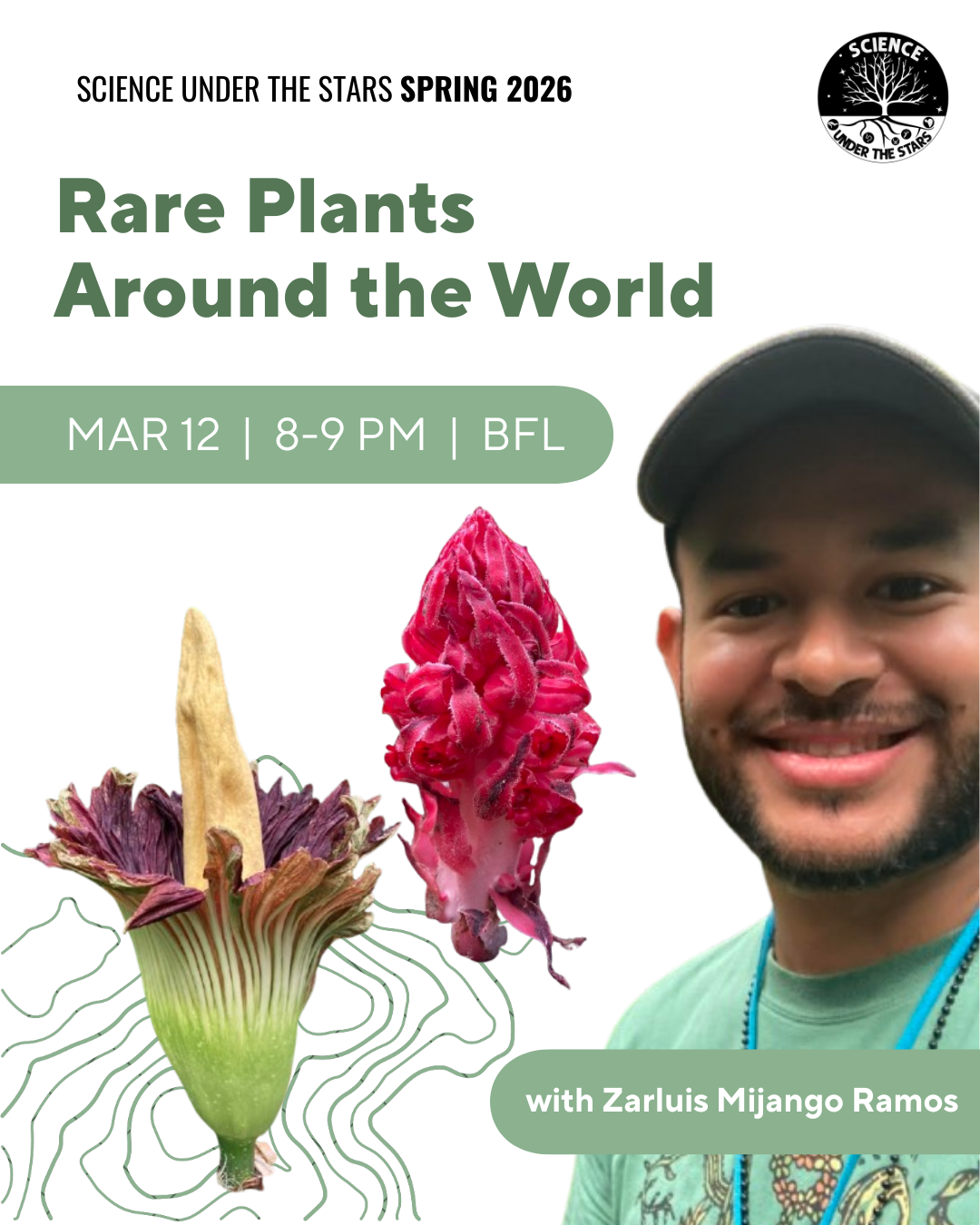
Rare plants around the world
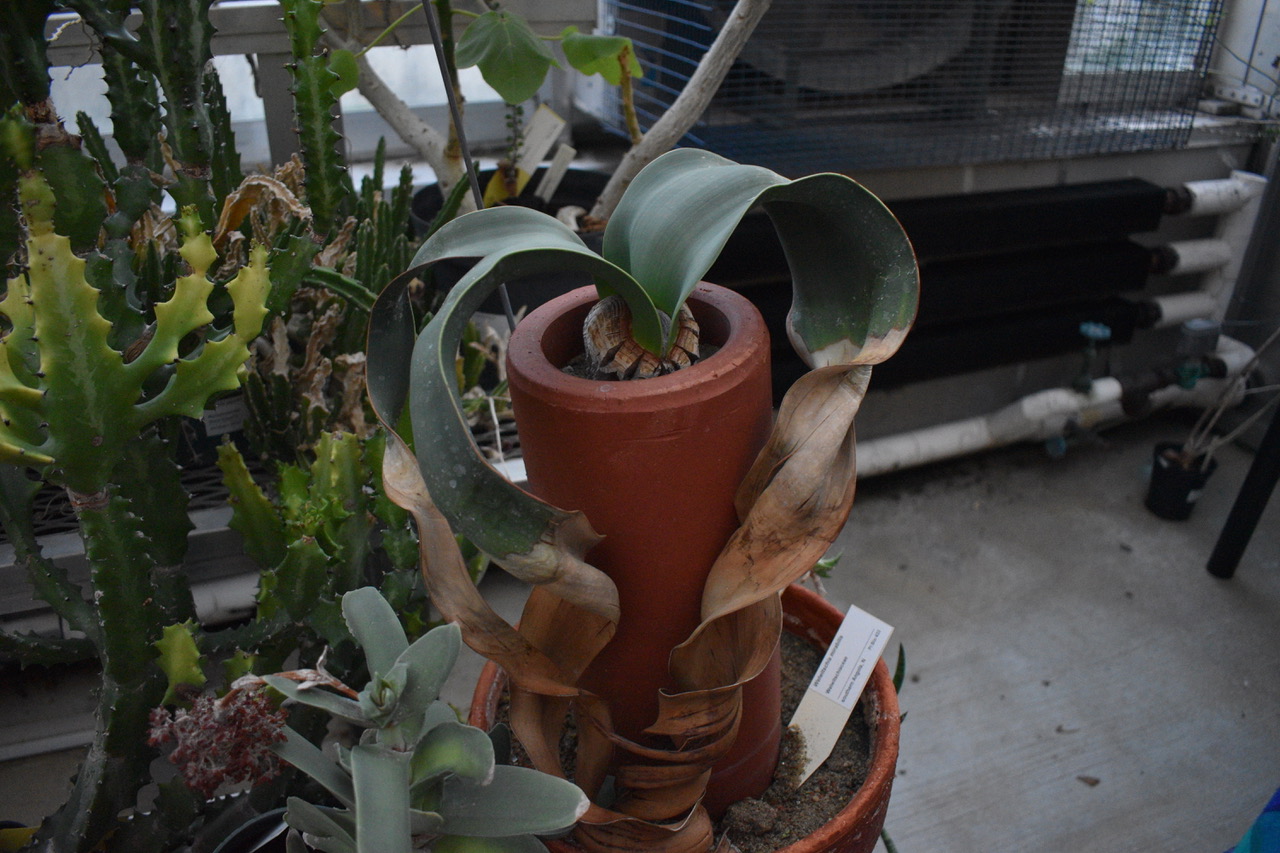
Two twisted leaves coming from a pot. This is a Welwitschia mirabilis from a green house in UIUC. A dessert plant from Namibia that can live from 1k-2k+ years. It is known as a living fossil. 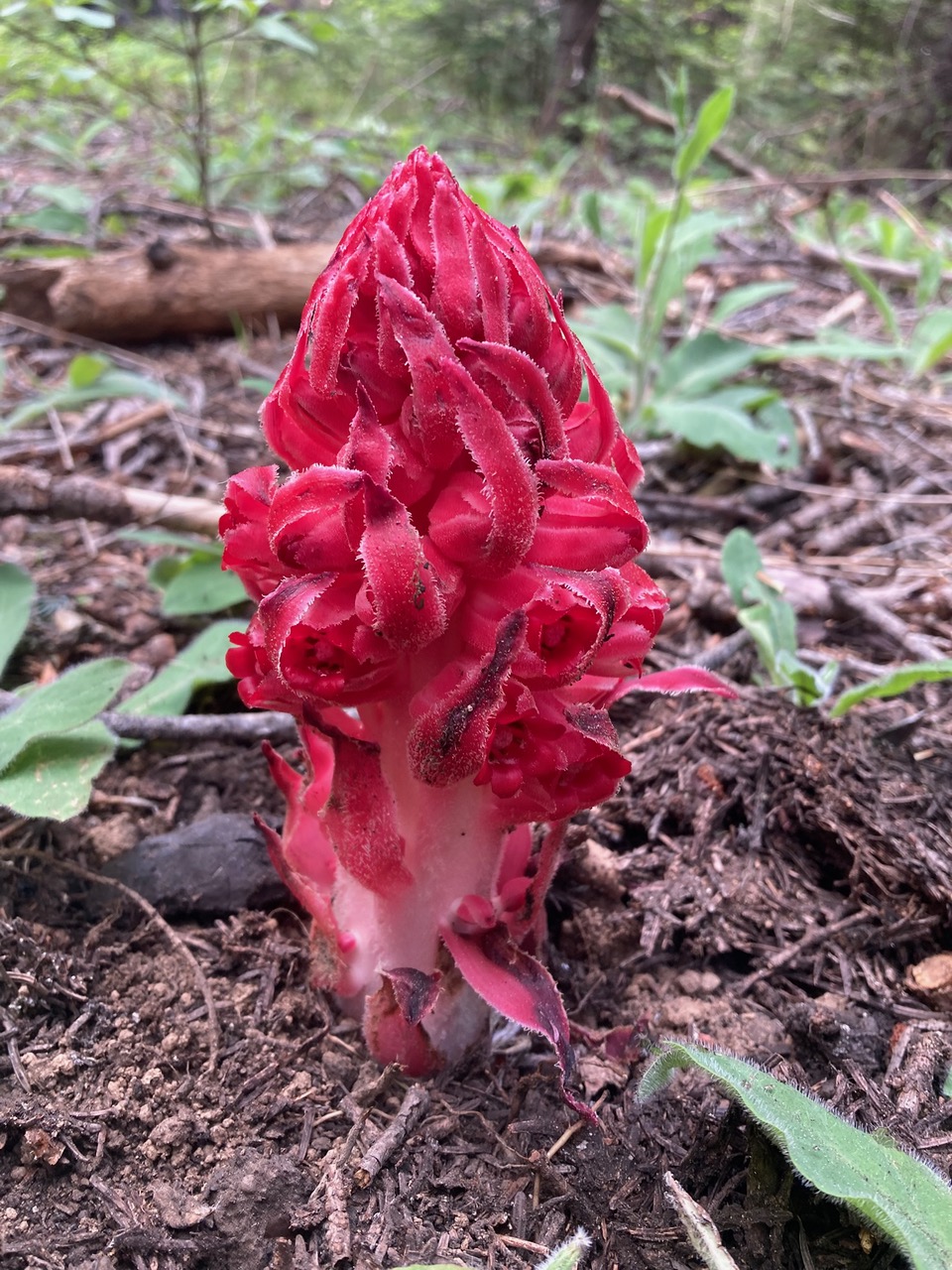
Red parasitic plant coming from the floor in the Red Woods in California, Sarcodes sanguinea 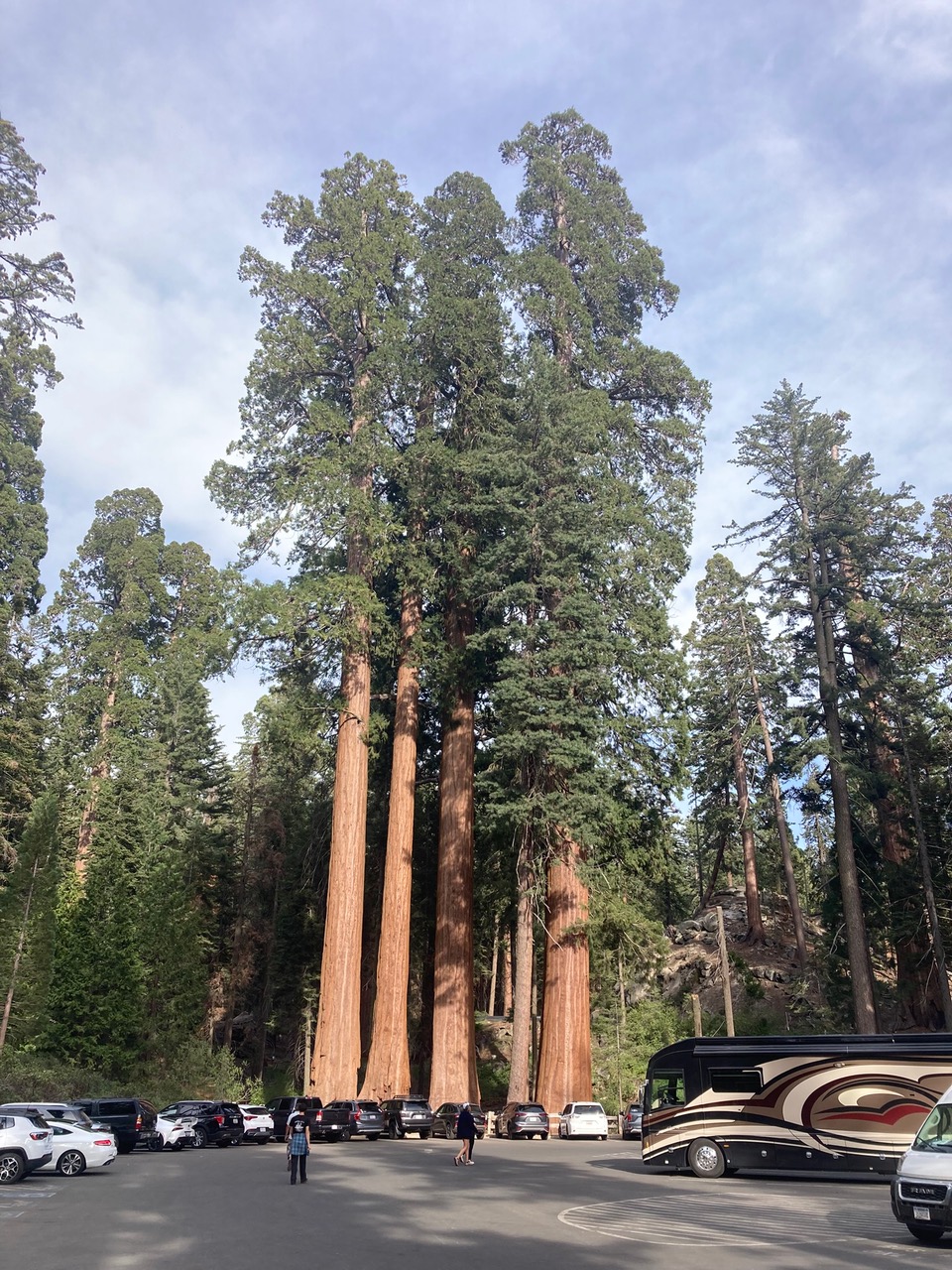
Sequoia trees from California. Massive trees that can live for many years and incredibly fire-resistant 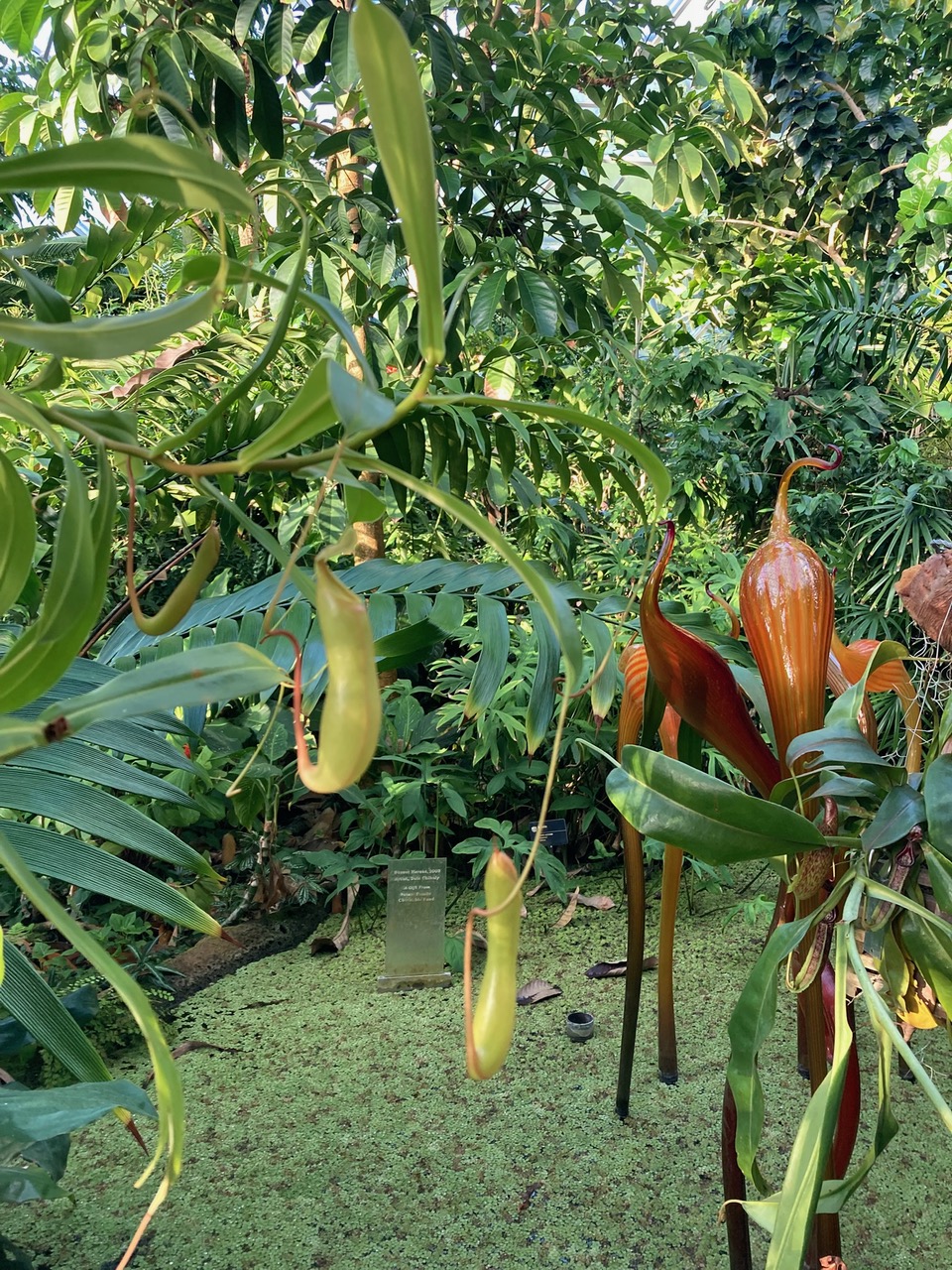
Pitcher plants from the Missouri Botanical Garden (MBG) Climatron. Carnivorous plants. 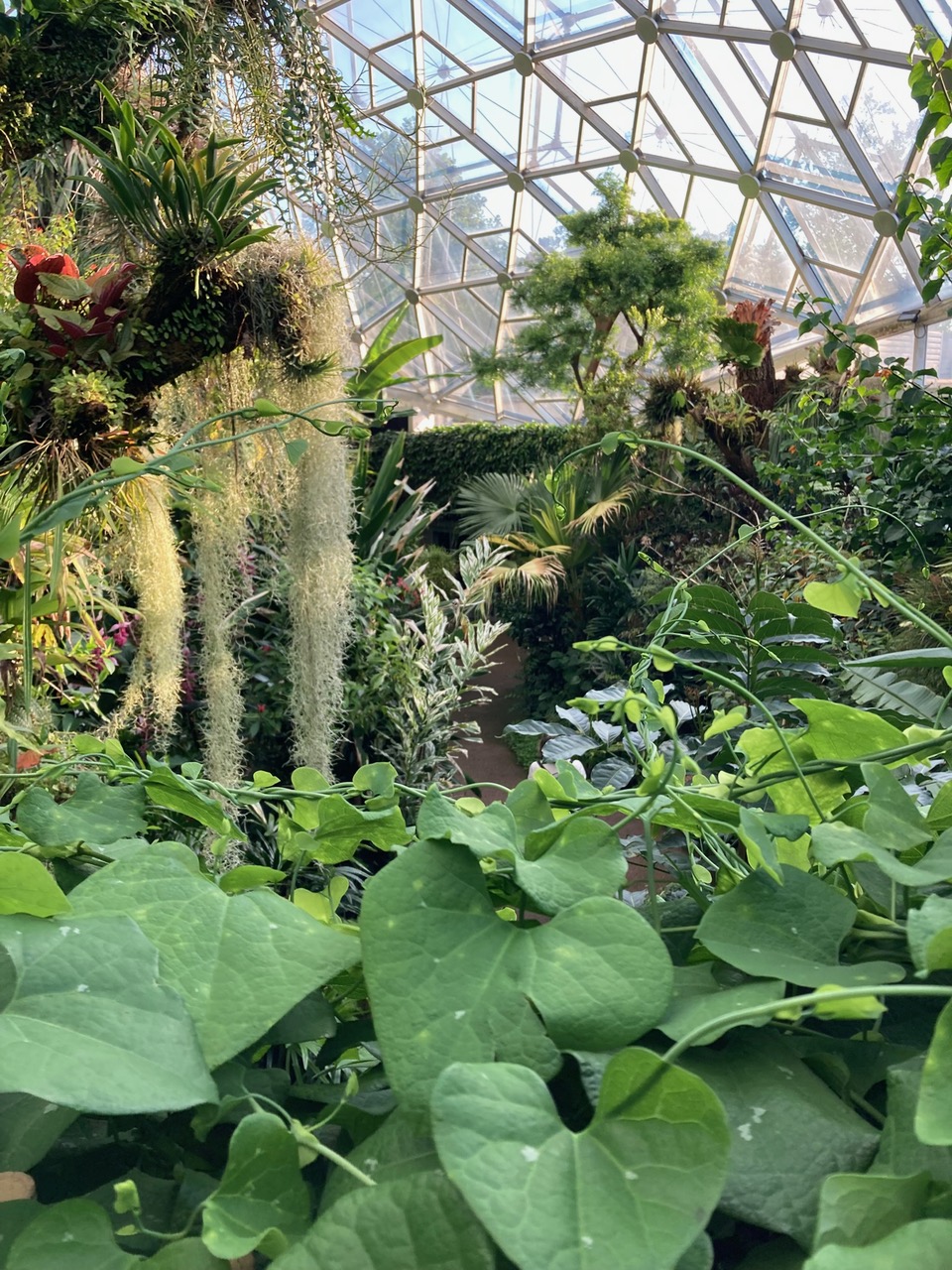
Landscape photo from inside the Clmatron at MBG with some very cool tropical plants. 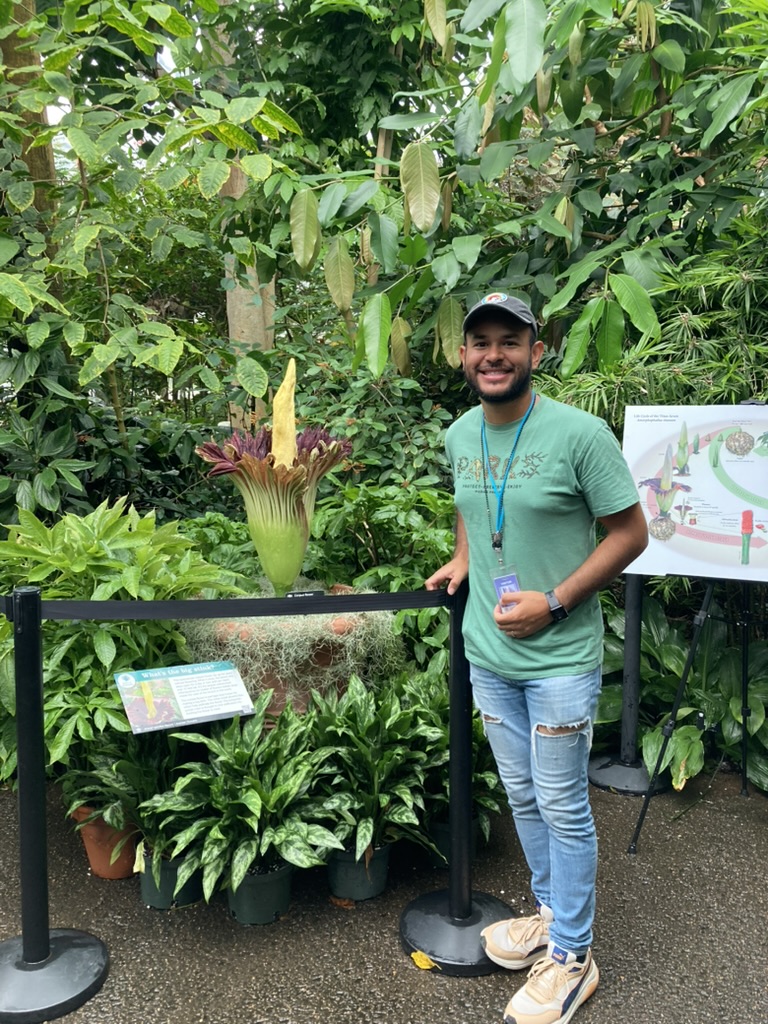
Zarluis and Amorphophallus titanium with open flowers at the MBG. Plant with the tallest flower. 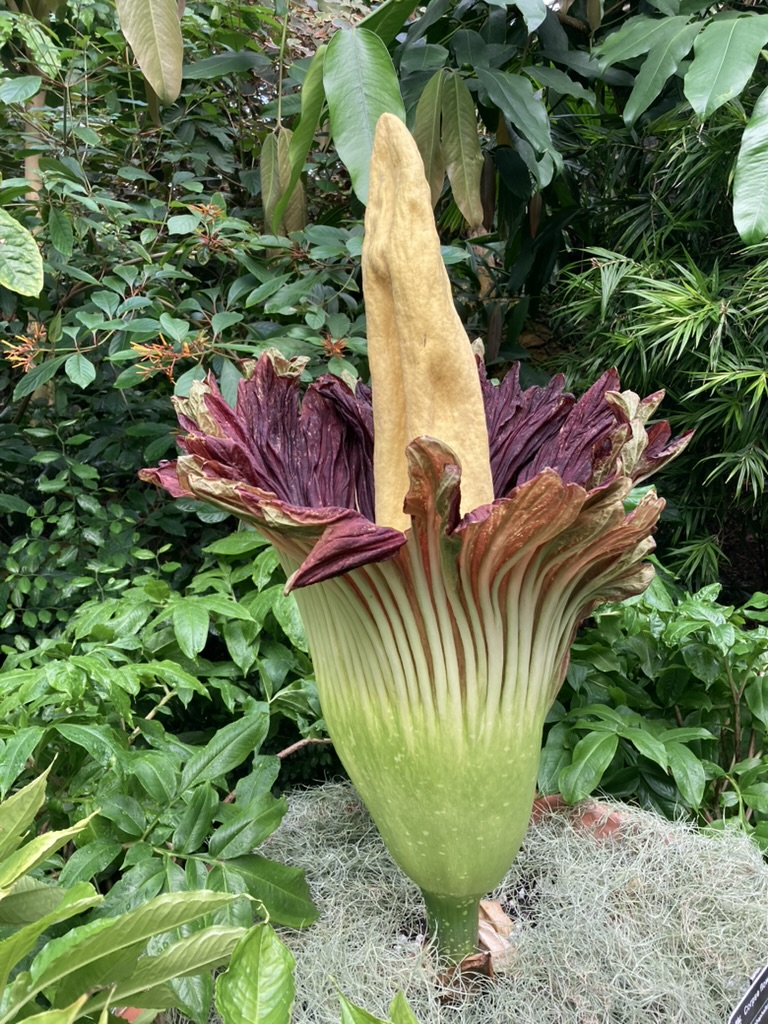
Close up of Amorphophallus titanium flower 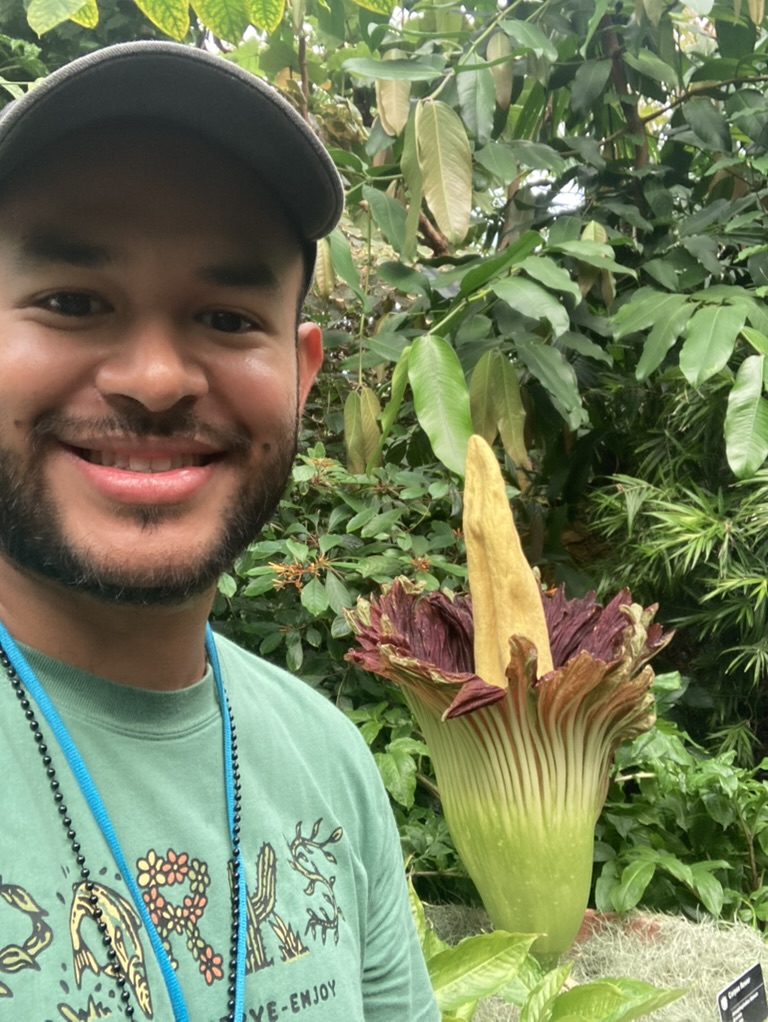
Selfie of Zarluis and Amorphophallus titanium flower
Plants are fascinating creatures that, compared to animals, cannot move around (sessile). Along with the surrounding environment and the fact that they cannot move, plants have develope bizarre and specialised mechanisms that have allow them to establish and persist through time in most environments around the globe. During this talk, we will do a virtual trip around the world to learn about some of these different unusual adaptations that make some of these plants very unique. Understanding these adaptations not only deepens our appreciation for plants and these species but also can helps us guide some conservation efforts. After all, we cannot save what we do not know.
Zarluis Mijango Ramos is a 5th year PhD student at UT Austin. Broadly, his research entails the study of ecological and evolutionary chemical interactions using the Juglandaceae plant family (Walnuts), which includes the chemical community effect of a monodominant (O. mexicanna) species on subordinates species in western Panama, and the effect of climatic variables on the chemical evolution and intraspecific chemical variation. He is from Panama where he did his bachelors in tropical Botany and got a MS from the Plant Biology department at UIUC. Outside of research, Zarluis enjoys watching sports, spending time with his cats and foster dogs (if he has) at home and loves cycling and cooking.
Lecture Schedule
- 7:00 pm: Kid’s activities and natural history displays
- 7:15 pm – 7:45 pm: Guided tour of the Brackenridge Field Laboratory (sturdy shoes and water recommended!)
- 8:00 pm: The talk begins!
- 8:45 pm: Q&A with the speaker
📍 Location: Brackenridge Field Laboratory, 2907 Lake Austin Blvd, Austin, Texas 78703
💡 No RSVP is required – just show up and enjoy!
🅿️ Free parking is available at BFL for all lecture events!
🌦️ While we aim to host all events outdoors, sometimes weather conditions or volunteer capacity may require that we move the event inside the laboratory building.
Follow us on our Instagram, Twitter, YouTube, Facebook, or email us to stay updated on event-specific details. We look forward to seeing you at our events! ✨