
Erin Giglio
Epigenetics: Nature and Nurture’s Love Child
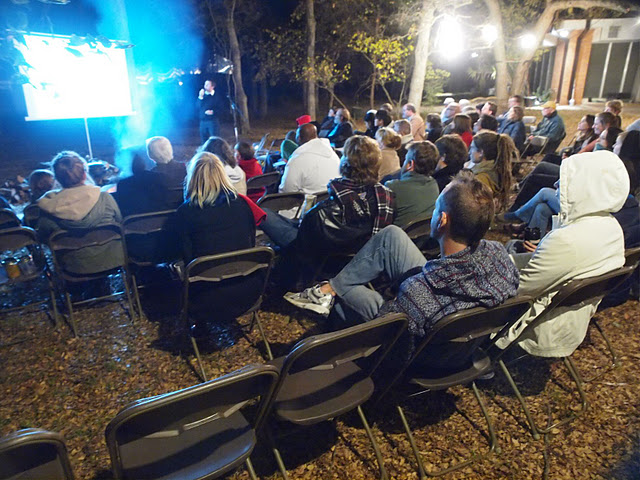
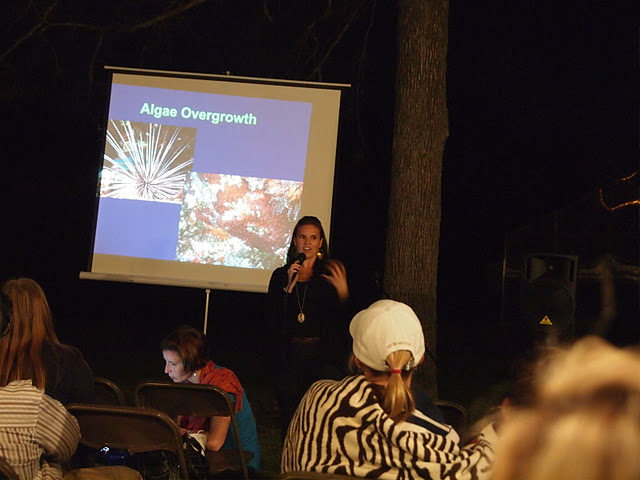
Science Under the Stars is a free public outreach lecture series in Austin, Texas. Events start at 8:00pm outdoors at Brackenridge Field Laboratory, 2907 Lake Austin Blvd, Austin, Texas 78703. Arrive early for refreshments and fun activities for kids of all ages! Guided tours of the field lab are available (wear sturdy shoes and bring water)!
Becca Tarvin
Poisons, death, and survival in the animal kingdom
Science Under the Stars is a free public outreach lecture series in Austin, Texas. Events start at 8:00pm outdoors at Brackenridge Field Laboratory, 2907 Lake Austin Blvd, Austin, Texas 78703. Arrive early for refreshments and fun activities for kids of all ages! Guided tours of the field lab are available (wear sturdy shoes and bring water)!
Emma Dietrich
Spider Silk: An Extraordinary Biomaterial
Known for its incredible strength and elasticity, possible human uses for spider silk currently range from the manufacturing of bulletproof vests, to the suturing of wounds, to the fabricating of elegant ball gowns, and on. But, how and why do spiders create and use this fascinating material in the natural world? And how can we possibly harvest tons of silk from spiders to use in the mass production of goods? To gain insight into these topics, come on out to the next Science under the Stars! (Caution: For those who are not arachnid-inclined, this talk will contain many images and video clips of spiders. Given that, we encourage anyone who is afraid of spiders to come learn more about these awesome creatures; perhaps we can convince you that they are, in fact, not so scary, and sometimes even adorable!).
Science Under the Stars is a free public outreach lecture series in Austin, Texas. Events start at 7:00pm outdoors at Brackenridge Field Laboratory, 2907 Lake Austin Blvd, Austin, Texas 78703. Arrive early for refreshments and fun activities for kids of all ages! Guided tours of the field lab are available (wear sturdy shoes and bring water)!
Kelsey Jiang
On Choosing A Home: Lake or Stream?
How do animals choose their habitat? Threespine stickleback is a small fish common in the Northern Hemisphere. Some of these fish live in lakes and others in adjoining streams in Canada. Come learn how they choose a habitat and why it matters in the evolution of new fish species.
Science Under the Stars is a free public outreach lecture series in Austin, Texas. Events start at 7:30pm outdoors at Brackenridge Field Laboratory, 2907 Lake Austin Blvd, Austin, Texas 78703. Arrive early for refreshments and fun activities for kids of all ages! Guided tours of the field lab start at 7pm (wear sturdy shoes and bring water)!
Ben Liebeskind

Electrical Life
It has been known for centuries that animal tissues can generate electricity. This fact has fed some of the more outlandish pseudo-scientific theories, such as animal magnetism. But every organism on the planet, right down to bacteria, uses electricity in one way or another. Join UT graduate student Ben Liebeskind as he explores some of the lesser known uses of electricity in strange and wonderful organisms, and talks about how evolution has favored the rise of complex electrical signaling in animal brains.


 Science Under The Stars