
Dr. Mark Moffett
Life Among the Ants
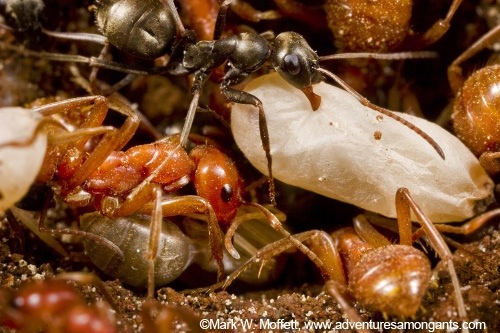
Dr. Mark W. Moffett, research associate at the National Museum of Natural History, author of the book Adventures Among Ants, and protégé of E.O. Wilson, talks about the ways that modern humans are much more like ants than we are like chimpanzees. With our societies of millions, only certain social insects and humans need to deal with issues of roadways and traffic rules, public health and environmental safety, assembly lines and teamwork, market economics and voting, slavery and mass warfare. The talk will be illustrated with a few of the hundreds of images from Mark’s National Geographic Magazine stories, many of subject never seen before. The lecture will transport the audience around the world, to experience the fierce driver ants of the Congo, deadly bulldog ants of Australia, marauder ants of Asia, leafcutter ants of South America, and slavery ants of the USA.
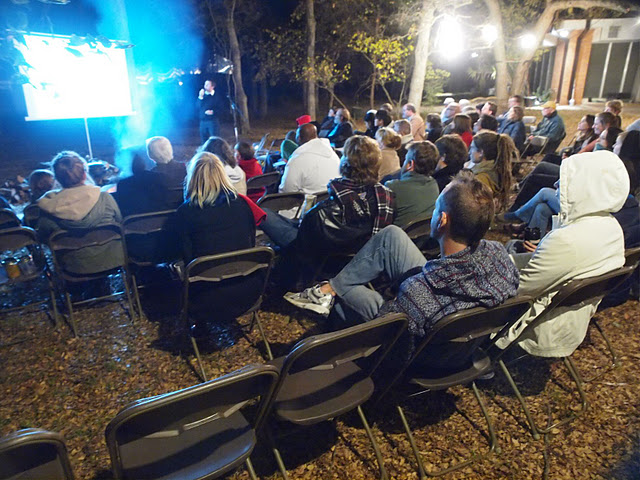
Science Under the Stars is a free, monthly public outreach lecture series founded and organized by graduate students in the Section of Integrative Biology at University of Texas at Austin. Our goals are to host fun, informal science outreach events for Austin citizens of all ages, and give scientists a venue to share their work with the general public.
Victoria Huang
Sex in the Animal Kingdom
This Valentine’s Day, learn about how other animals find their mates.

You may know about the birds and the bees, but do you know about the
snails and the sea horses? Courtship and mating behaviors are as
diverse as the species in our world. Learn about how the environment
influences an animal’s reproduction, and how it finds The One (or One
Hundred).
Victoria is a graduate student in the Section of Integrative Biology
at the University of Texas at Austin.
Chintan Modi
Light Bright: Fluorescence and Chemiluminescence Lighting New Paths in Biology and Technology
Join us as Chintan Modi explores how scientists continue to find novel uses for biofluorescent and biochemiluminescent molecules and use them to gain insight into the inner workings of biology and chemistry! Science Under the Stars is a free public outreach lecture series in Austin, Texas.
In nature, we see organisms put on beautiful light shows, glowing through the use of specialized proteins. Proteins that glow are called biofluorescence and biochemiluminescence molecules, which were discovered over 50 to 60 years ago. These proteins with their unique properties have enabled us to visualize biological processes in a live cell and an organism. Today we can color each individual neuron of a mouse with different fluorescent proteins, or we can use fluorescent proteins to observe how pathogenic bacteria grow in a bio-film. The use of these light-producing biomolecules as biotechnology tools revolutionized the biological sciences in the past 20 years, which was recognized by the 2008 Nobel Prize in chemistry.
Chintan Modi is a graduate student in Cell and Molecular Biology at the University of Texas at Austin.
Patrick Stinson
How Animals Adapt to Living Around Humans
Patrick Stinson explains the myriad ways in which animals and humans interact in urban ecosystems!

Patrick Stinson is a graduate student in the Ecology, Evolution and Behavior graduate program at the University of Texas at Austin.
Stavana Strutz
The Wild Wild West:
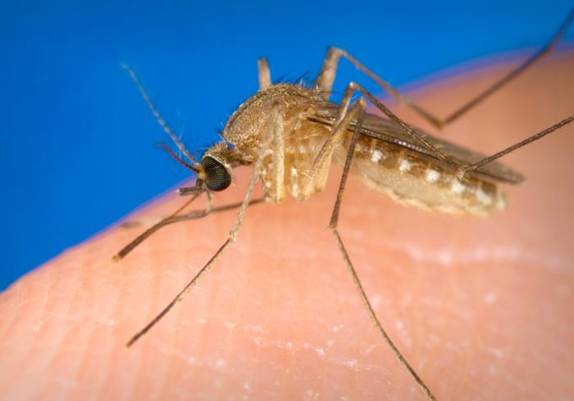
West Nile and Vector-borne Disease in Texas



 Science Under The Stars