
Chad Smith
Race To Egg: How Sperm Competition Drives the Evolution of the Sexes.

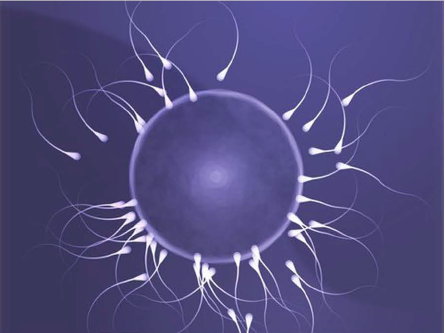
Why do males produce so many sperm? While Charles Darwin is famous for explaining how male competition for females could lead to the evolution of male ornaments and weapons, he did not foresee that competition could continue after mating is over. In this talk we’ll explore how competition between sperm from more than one male for the fertilization of the eggs can have widespread effects on male behavior, anatomy, and of course the characteristics of the sperm itself. In addition, we now recognize females can play an important role in determining the outcome of sperm competition, and as a consequence we’ll talk about female role in this process.
Click here to download the poster from Chad’s SUTS Event!

Laura Dugan
Aliens Among Us: Invasive Species.
What are they, what do they do and what can we do about them?

Laura Dugan at Posa Azul, Cuatrocienegas, Mexico

The invasive Jewel Ciclid.
Invasive alien species (IAS) are recognized as one of the greatest threats to global biodiversity. In today’s modern world, species are moved all over the globe via intentional and unintentional means. Many of these species are never able to establish and spread in their new environments, but those that do can wreak havoc on native communities via a variety of interactions including predation, competition and hybridization. In this talk, I will discuss a few of the effects of invasive species and introduce some of the major Texas invaders. I will also discuss some of the methods that are currently being used to combat invasive species as well as genetic biocontrol technologies that are being investigated as potential amelioration techniques, some of which have already been put into practice in Australia.
Click here to download the poster from Laura’s SUTS Event!

Hayley Gillespie
Texas Salamander Extravaganza
Hayley is a graduate student studying the ecology and behavior of the endangered Barton Springs Salamander (Eurycea sosorum) that lives right here in Austin, Texas. Texas is home to many species of salamanders including the giant black & yellow tiger salamanders, two-legged Sirens, waterdogs, spotted newts, slimy salamanders and a diverse group of permanently aquatic salamanders in the genus Eurycea, all very closely related to our Barton Springs Salamander. Come and learn about their incredible biology, how they survive in all kinds of habitats, and what’s being done to conserve and protect these fascinating amphibians!
Sahotra Sarkar
The Balcones Canyonlands
We will talk about the Hill County and the remarkable animals and plants that make up its biotic community. How well are we preserving this biodiversity? What is its future? What will climate change do to it?
Mike Singer
Humans, from the Perspective of a Californian Butterfly
Back in 1953 my grandmother said: “Butterflies…HAH! Very pretty, but what are they FOR?” I had no answer. In this talk I will turn the question around and ask from the butterfly’s perspective: “Humans…very big and clumsy…. but what are they FOR?” We might think that the answer is just that humans are BAD, but no, it’s more complicated than that. Without thinking about it, we humans create puzzles for butterflies to solve. Sometimes they succeed and sometimes they don’t.
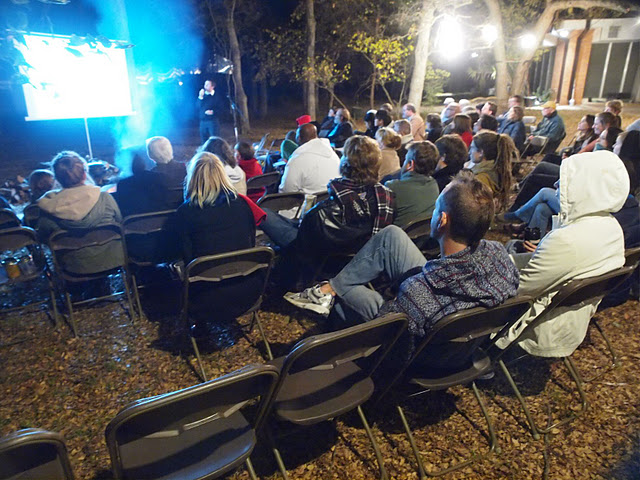

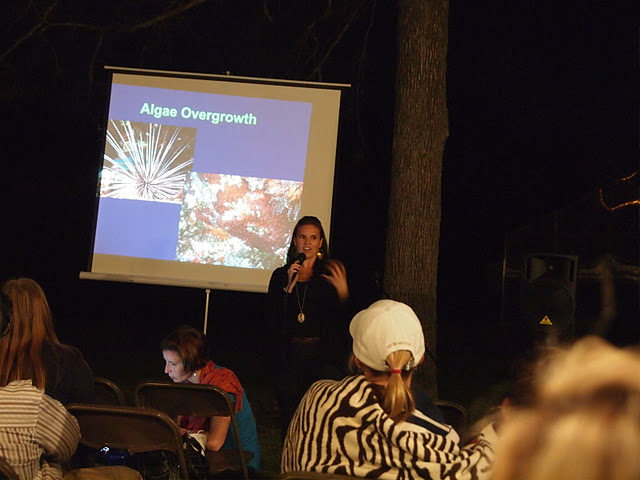

 Science Under The Stars