
January 16th, Juju Dessert
Leafcutter Ants: The Amazing Fungus Farmers
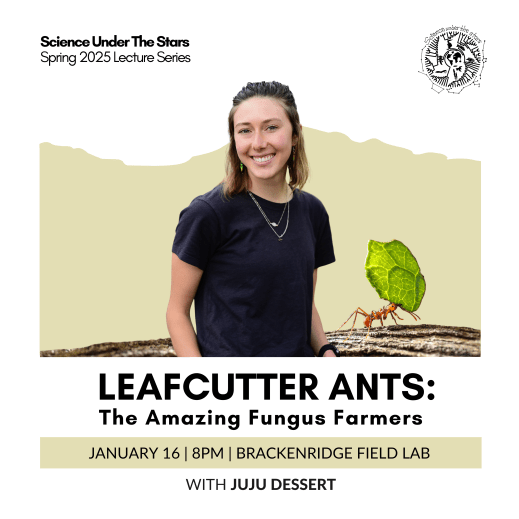
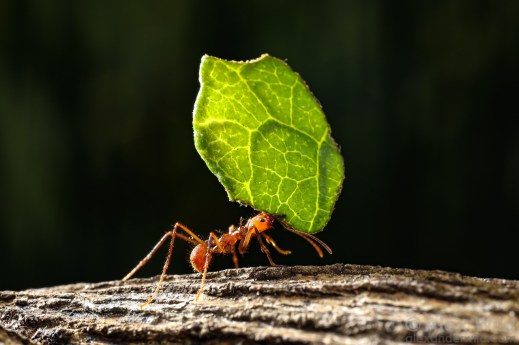
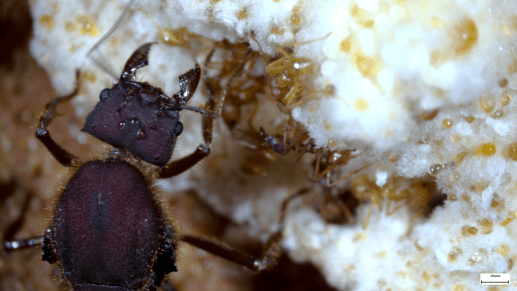
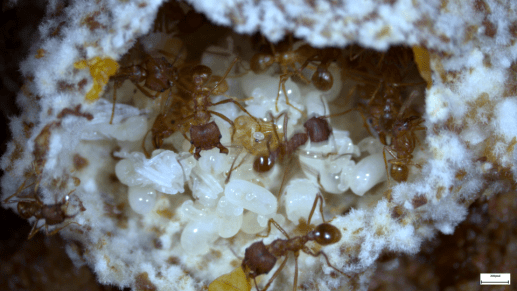
Join Juju Dessert, Molecular Biology PhD candidate at UT Austin, on January 16th to explore the fascinating world of leafcutter ants! These ants aren’t eating the leaves they carry—they use plant matter to cultivate a special fungus in their underground chambers. It’s like farming, but instead of growing vegetables, they grow the fungus that serves as their food. Juju’s research delves into the incredible partnership between these ants and their fungus, focusing on the special enzymes they use to break down tough plant material. Discover how this unique collaboration works and why it’s so important to our ecosystems!
Lecture Schedule
- 7:00 pm: Kid’s activities and natural history displays
- 7:15 pm – 7:45 pm: Guided tour of the Brackenridge Field Laboratory (sturdy shoes and water recommended!)
- 8:00 pm: The talk begins!
- 8:45 pm: Q&A with the speaker
📍 Location: Brackenridge Field Laboratory, 2907 Lake Austin Blvd, Austin, Texas 78703
💡 No RSVP is required – just show up and enjoy!
🌦️ While we aim to host all events outdoors, sometimes weather conditions or volunteer capacity may require that we move the event inside the laboratory building.
🅿️ Free parking is available at BFL for all lecture events!
Follow us on our Instagram, Twitter, YouTube, Facebook, or email us to stay updated on event-specific details. We look forward to seeing you at our events! ✨
🎨 Join us at STEM Girl Day at UT Austin on February 22! We’ll have a table featuring our activity: Coloring, Creatures, and Curiosity. Explore fascinating Austin animals, get creative with coloring, and ask UT biologists anything you’re curious about. Don’t forget to register for STEM Girl Day 2025!
John Abbott
The Art and Science of High-speed Flash Photography


Have you ever wondered what you could see in nature by stopping the motion of a fast moving event? With high-speed flash photography, you can achieve exposures as fast as 1/50,000 sec and see exactly how a wing might be used in flight or a beetle might dive into the water. I will talk about what high-speed flash photography is and the techniques involved in carrying it out along with the implications for scientific inquiry.
Dr. John Abbott is curator of insects at the Texas Natural Science Center and is owner of John C. Abbott Nature Photography
Eric Miller
Seeing It As It Happens: Witnessing, controlling, and understanding evolution
How do scientists discover how evolution affects a group of organisms? By doing what scientists do best — experimenting and recording the results! Join us as we talk about how scientists control the environment of bacteria, viruses, and insects to learn more about evolution. We will also talk about how people use evolution to improve computers, crops, pets, and clean up the environment.

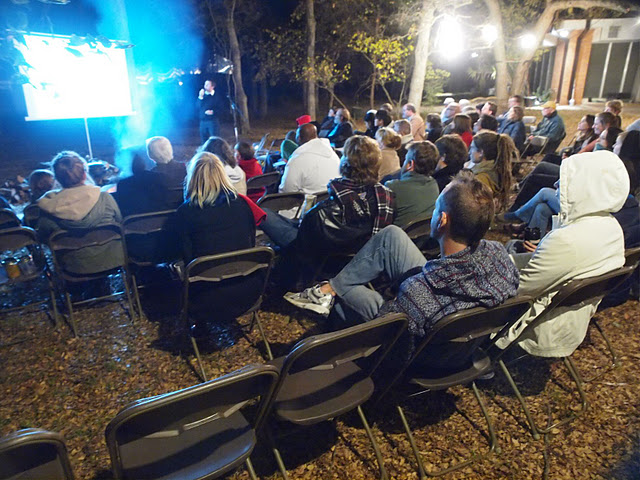

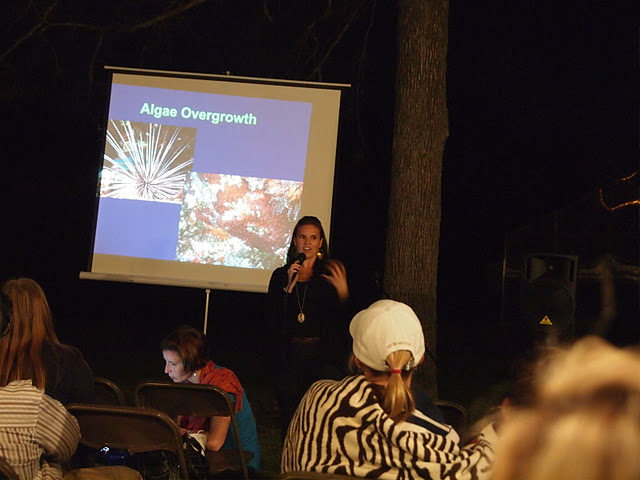

 Science Under The Stars