
November 12th, Tristan Kubik
Planet of the Insects
Please note that for this event, both the lecture and Q&A will be live and NOT recorded.
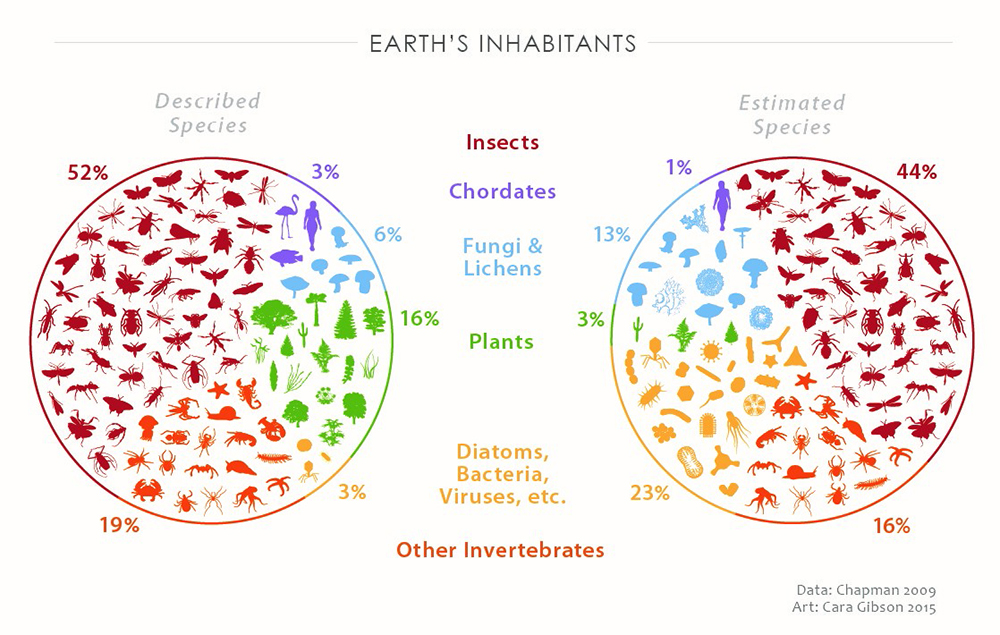
If you don’t like insects, then you’re living on the wrong planet. Earth is likely home to over ten million species of insects. Compared to the 5,000 or so mammal species and the 20,000 or so plant species, insect biodiversity vastly overshadows all other life on our planet. Furthermore, there are close to 10 quintillion insects estimated to be alive this very second. That’s more than 111 million creepy crawlies for every single one of the 9 billion humans alive today. Insects eat everything, do everything, and without them, life on land could not exist. Insects are important pollinators, they take care of life’s waste and dead organic material, and support every terrestrial ecosystem they occur in. But not all insects are allies. Insect pests are our number one competitor for food, blood-sucking insects have killed more humans than all the wars, famines, and natural disasters combined, and bugs constantly invade our homes and spoil our goods. So why are insects so successful? What has driven their massive diversity? How old are insects? And what are some of the ways we humans have figured out how to coexist with the true overlords of planet Earth? Join me, Tristan Kubik, a zany entomologist, as I introduce you to the marvelous microcosm of insects and show you that, contrary to what we would like to believe, insects truly are the dominant form of life on planet Earth.
Science Under the Stars has gone virtual! This semester all SUTS activities will be online, but we encourage you to participate outdoors under the stars in your backyard! (If wifi allows for it, of course.) November’s schedule is as follows:
- November 5th: Links to the kids activities and live online lecture/Q&A will be posted here and as an event on our Facebook page.
- November 12th, 7:00pm CST: Live online lecture and Q&A with the speaker!
Science Under the Stars is a free public outreach lecture series based in Austin, Texas.
Spring Neighborhood Science at Twin Oaks Branch Library
Science Under the Stars has expanded to include the Austin Public Library! At Neighborhood Science, previous SUTS speakers will present at different library branches around the city a couple times a month. Below are the dates and descriptions for this fall at the Twin Oaks Branch Library, 1800 S 5th St, Austin, TX 78704. All talks begin at 7pm.
Photo credit: Bjørn Christian Tørrissen
Photo credit: Hubertl
Spring Neighborhood Science at Howson Branch Library
Science Under the Stars has expanded to include the Austin Public Library! At Neighborhood Science, previous SUTS speakers will present at different library branches around the city a couple times a month. Below are the dates and descriptions for this fall at the Howson Branch Library, 2500 Exposition Blvd, Austin, TX 78703. All talks begin at 7:30pm. **These talks will be held outdoors, so bring a chair and dress accordingly! Talks will be moved indoors in case of inclement weather.
Photo credit: Bjørn Christian Tørrissen
Photo credit: Hubertl
Photo credit: Anne Chambers
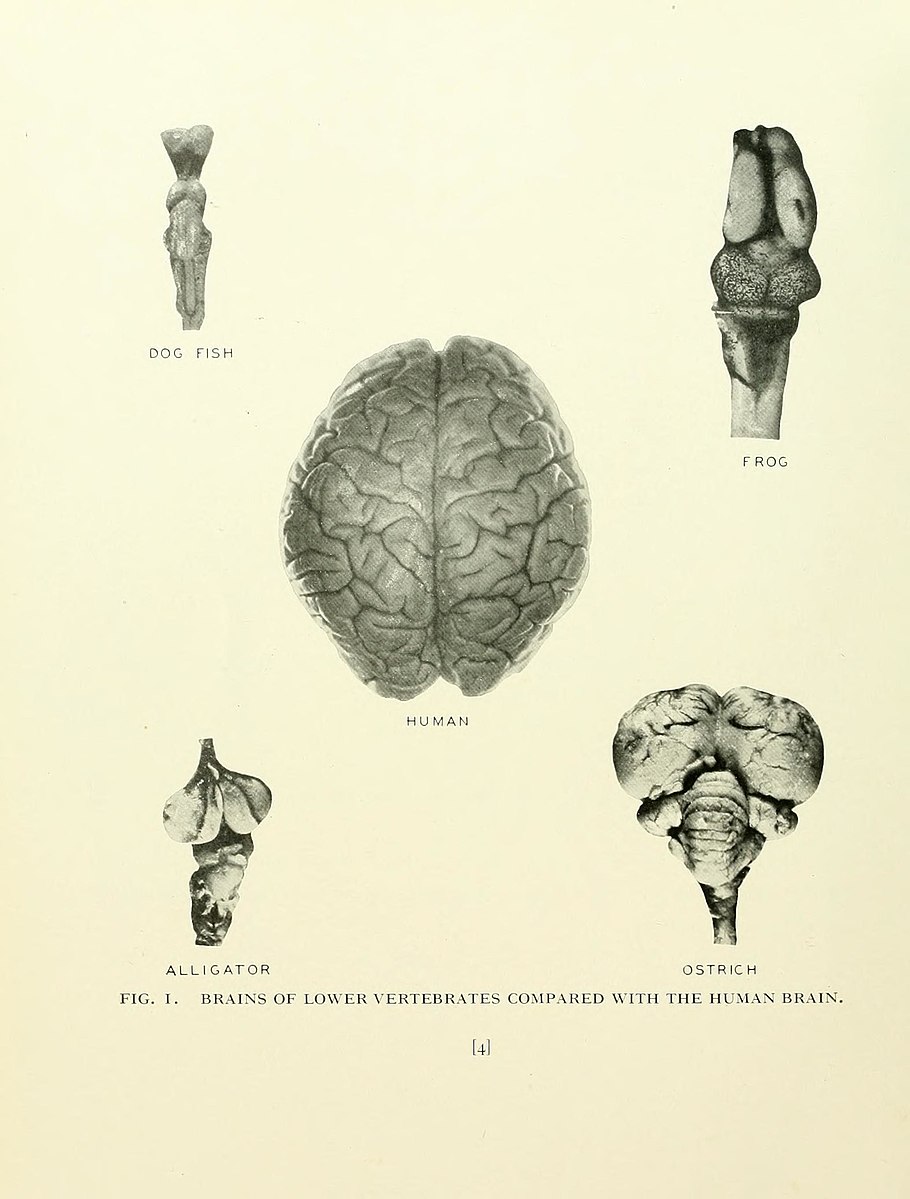
Photo credit: Internet Archive Book Images
First Neighborhood Science of the Semester!
Claire Hemingway – Brainy bats: strategies for finding food in the jungle at night
Bats are remarkable in their diversity. Over 1300 species of bats can be found in every continent, except Antarctica. They come in a variety of different sizes, shapes, and colors They also eat many different things such as fruit, nectar, insects, frogs, and fish. Because many bats have to find their food at night, they have evolved a whole suite of different hunting strategies. The brains of these impressive animals have been shaped for a long time to allow bats to find and remember where food is. I will cover just a handful of examples of the ways in which these animals have come up with solutions for finding food at night.
Science Under the Stars has expanded to include the Austin Public Library! At Neighborhood Science, previous SUTS speakers will present at different library branches around the city a couple times a month. This fun free talk for people of all ages will be held at the Howson Branch Library (2500 Exposition Blvd) on Tuesday, January 28th starting at 7:30pm. Q&A will follow the talk.
December 12, Claire Hemingway
Brainy bats: strategies for finding food in the jungle at night
Bats are remarkable in their diversity. Over 1300 species of bats can be found in every continent, except Antarctica. They come in a variety of different sizes, shapes, and colors They also eat many different things such as fruit, nectar, insects, frogs, and fish. Because many bats have to find their food at night, they have evolved a whole suite of different hunting strategies. The brains of these impressive animals have been shaped for a long time to allow bats to find and remember where food is. I will cover just a handful of examples of the ways in which these animals have come up with solutions for finding food at night.
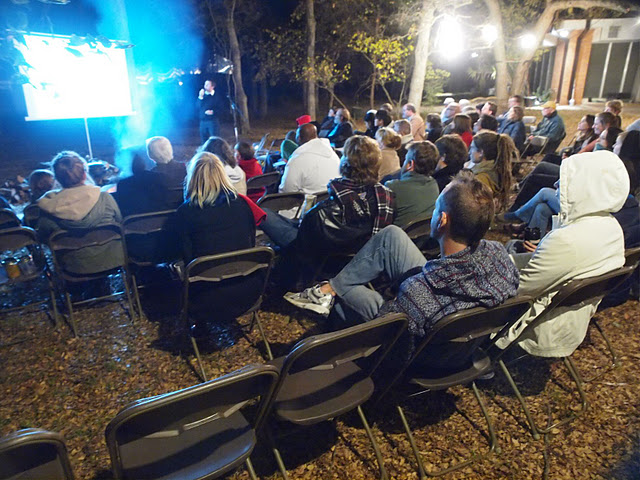
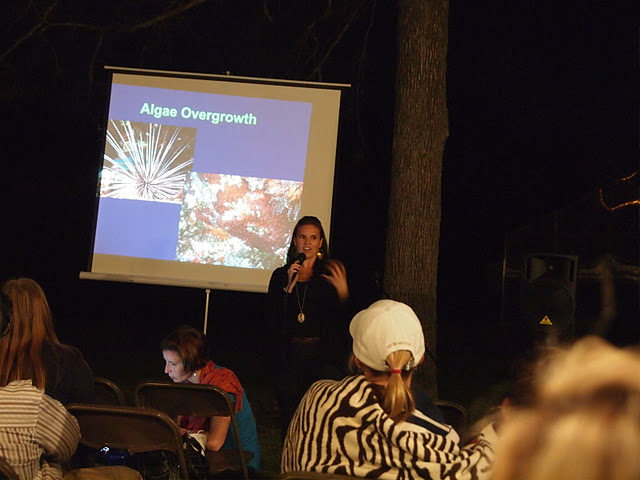
Science Under the Stars is a free public outreach lecture series in Austin, Texas. The talk will be held outdoors at Brackenridge Field Laboratory, 2907 Lake Austin Blvd, Austin, Texas 78703. Here’s the schedule for this month’s event (please note time change):
- 6:00 pm: Snacks, kids activities, and displays of local animals and plants found at Brackenridge Field Laboratory will be available.
- 6:15 pm-6:45 pm: Guided tour of the field lab (wear sturdy shoes and bring water)!
- 7:00 pm: Settle in, because the talk begins now!
- 7:45 pm: Q&A with the speaker.
First time visitor? Please read our pet policy & field station rules here, and find parking info and directions here.



 Science Under The Stars