
Ben Liebeskind

Electrical Life
It has been known for centuries that animal tissues can generate electricity. This fact has fed some of the more outlandish pseudo-scientific theories, such as animal magnetism. But every organism on the planet, right down to bacteria, uses electricity in one way or another. Join UT graduate student Ben Liebeskind as he explores some of the lesser known uses of electricity in strange and wonderful organisms, and talks about how evolution has favored the rise of complex electrical signaling in animal brains.
Congrats to SUTS Speaker Patricia Salerno

Congrats to previous SUTS speaker Patricia Salerno, who gave a fantastic talk last fall on the biology of the Tepuis of S. America, on her upcoming publication in the journal Evolution as well as today’s article by science writer Carl Zimmer in The New York Times.
Darwin Day
Join us as the Science Under The Stars team helps celebrate Darwin Day at the Texas Memorial Museum. Our very own past speaker Emily Jane McTavish will be giving her excellent talk about the evolution of Texas Longhorns at 3:00pm!
Sunday, February 11, 2012 1-4:45pm
Texas Memorial Museum
2400 Trinity St.
Austin, Texas 78705
© John A. Maisano
Here’s more information from the Texas Memorial Museum’s website:
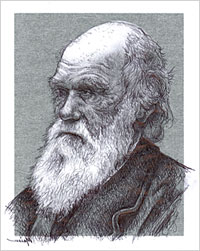
Join TNSC on Sunday, February 12, 2012 from 1 p.m. to 4:45 p.m. for Darwin Day—a free, family-friendly event celebrating the anniversary of Charles Darwin’s birth.
Travel on your own voyage of discovery as you explore specimens from the TNSC collections similar to those that Darwin saw during his journey while aboard the HMS Beagle, investigate how Darwin’s observations led him to develop fundamental theories of evolution, and learn more about Darwin’s influence on modern day science.
FREE activities for the whole-family include:
Ongoing: Arts and crafts, exploration of TNSC specimens at booths hosted by University of Texas at Austin scientists, and digging in the Fossil Dig Pit
Talks by University of Texas at Austin Scientists:
1:30 p.m.—Sassy taste or sexy traits: Stories about co-evolution of female preference and male traits: presented by Silu Wang, Graduate Student, School of Integrative Biology
3:00 p.m.—Longhorn evolution: presented by Emily Jane McTavish, Graduate Student, School of Integrative Biology
In 1831 Charles Darwin set off on a voyage across the Atlantic Ocean on the HMS Beagle. His scientific observations of the amazing diversity of animals he saw in South America were the foundation of his theory of evolution by natural selection. I use the principles of evolution to study Texas Longhorn cattle, another organism that made that long voyage across the Atlantic Ocean—over 300 years before Darwin.
Emily Jane McTavish
Journey to a New World – The Global History of Texas Longhorn Cattle!

★ Texas’s iconic longhorn cattle are descended from herds arriving with Columbus in the 1490’s. Left to roam the unfenced southwest, they adapted to their new environment through natural selection.
★ Using genomic data, we will trace the longhorn’s remarkable history – both around the globe, and back to the time of cattle domestication 8,000 years ago!
Chad Smith
Race To Egg: How Sperm Competition Drives the Evolution of the Sexes.

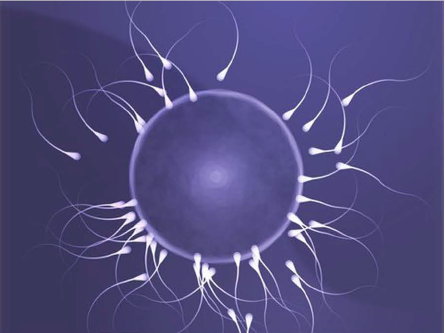
Why do males produce so many sperm? While Charles Darwin is famous for explaining how male competition for females could lead to the evolution of male ornaments and weapons, he did not foresee that competition could continue after mating is over. In this talk we’ll explore how competition between sperm from more than one male for the fertilization of the eggs can have widespread effects on male behavior, anatomy, and of course the characteristics of the sperm itself. In addition, we now recognize females can play an important role in determining the outcome of sperm competition, and as a consequence we’ll talk about female role in this process.
Click here to download the poster from Chad’s SUTS Event!



 Science Under The Stars